 ChipApex | Global Electronic Components Supplier

SEARCH
Search Product
Search Post
Search productSearch post
Consult the customer manager about the wholesale price.
consultation hotline:86-132-6715-2157
email:[email protected]
Contact the product manager for consultation. One-stop consultation is available.
Do you want a lower wholesale price? Please send us your inquiry and we will reply immediately.
LE88266DLC is listed in the Telecom range at ChipApex. The manufacturer field lists Microchip Technology. Its product description is IC TELECOM INTERFACE 80LQFP. Review the specifications below when checking this part for your BOM.
The LE88266DLC is a dual-channel Automatic Battery Switching (ABS) VoicePort device manufactured by Microchip Technology. It implements a universal telephone line interface from the high voltage subscriber line to digital interfaces, providing complete BORSCHT functions for two channels in a single device. The component operates with a supply voltage range of 4.75V to 35V and utilizes an 80-pin eLQFP package. It supports PCM, MPI, or GCI interfaces and offers worldwide programmability for input impedance, balance, gain, DC feed, and ringing parameters.
Verify component authenticity through authorized Microchip distributors. Confirm package integrity upon receipt, as the 80-pin eLQFP requires careful handling during surface mount assembly. Ensure compliance with RoHS directives and check for specific environmental certifications required by your manufacturing standards before integration into final products.
Select the LE88266DLC when a dual-channel voice interface with integrated high-voltage generation is required. This model is suitable for applications needing flexible digital connectivity via PCM, MPI, or GCI. Consider the LE88286 variant if higher ringing voltage or test load switching features are necessary for medium loop applications.
The LE88266DLC belongs to the VE880 Series Wideband VoicePort family. It serves as a software-programmable line interface solution designed for broadband voice-over-IP and telephony applications. The device integrates analog front-end processing with digital codec functions, reducing the need for external discrete components in subscriber line circuits.
The LE88286DLC is a pin-compatible alternative within the same series offering higher ringing voltage capabilities.
Explore related parts through Interface, Integrated Circuits (ICs), all product categories, ChipApex homepage.
Microchip Technology LE88266DLC is normally evaluated in Telecom category when procurement and engineering both need the same measurable approval basis: package fit, electrical limits, and a test path that can be rerun later. Key specs include Description (IC TELECOM INTERFACE 80LQFP), Packaging (Tray), Supply (4.75V ~ 35V), Package/case (80-LQFP), and Mounting (Surface Mount). In practice, the release review usually stays anchored on interface (PCM).
What details help you quote LE88266DLC quickly?
Send the part number (LE88266DLC), quantity, target delivery date, and any required packaging or documentation.
Which Function is listed for LE88266DLC?
Telecom Circuit
Which Interface is listed for LE88266DLC?
PCM
What supply voltage range does LE88266DLC require?
4.75V ~ 35V
Microchip Technology LE88266DLC in the Telecom category is usually shortlisted only after engineers lock the released interface, margin, and field condition that will decide acceptance on assembled hardware. Once the part is on the shipped assembly, the first review usually comes back to interface (PCM), package/case (80-LQFP), and mounting (Surface Mount). Good RF building blocks accelerate certification and reduce re-spin risk in antenna-to-baseband designs. RF parts are judged by how they behave on the board: impedance environment, coupling, shielding, and the real antenna or load. RF signal paths are usually validated in the finished enclosure because matching, shielding, supply isolation, and nearby aggressors often decide the real margin more than the bare schematic does. In private cellular (LTE/5G) and Wi-Fi infrastructure, RF stages operate in outdoor units exposed to humidity and thermal stress where stability affects throughput.
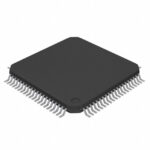 LE88266DLC

The activity of extra discounts on wholesale prices is in full swing…
Please fill in your contact information and we will send you the latest wholesale price list.





