ChipApex | Global Electronic Components Supplier

SEARCH
Search Product
Search Post
— IC芯片 | 连接器 | 传感器 | 被动器件 —
Search productSearch post
— IC芯片 | 连接器 | 传感器 | 被动器件 —
Consult the customer manager about the wholesale price.
consultation hotline:86-132-6715-2157
email:[email protected]
Contact the product manager for consultation. One-stop consultation is available.
Do you want a lower wholesale price? Please send us your inquiry and we will reply immediately.
The LF347N/NOPB is a quad general-purpose JFET-input operational amplifier manufactured by Texas Instruments. It features four independent amplifiers in a single package, offering high-speed performance with a gain-bandwidth product of 3 MHz and a slew rate of 13 V/µs. The device operates on supply voltages ranging from 8 V to 36 V (single) or ±4 V to ±18 V (dual). Key electrical characteristics include an input bias current of 200 pA, an input offset voltage of 10 mV, and a common-mode rejection ratio of 100 dB. It is housed in a 14-pin PDIP package and supports through-hole mounting.
Verify the specific suffix 'NOPB' indicates lead-free compliance and RoHS status as per Texas Instruments documentation. Confirm the package type is PDIP-14 for through-hole installation. Ensure the operating temperature range matches the application requirements, typically 0°C to +70°C for this variant. Cross-reference the manufacturer part number with official TI databases to confirm current production status and availability.
Select the LF347N/NOPB when designing circuits requiring multiple high-speed amplification stages with low input current. It is suitable for applications where moderate precision is acceptable but speed and bandwidth are critical. Compare its 3 MHz gain-bandwidth product against other quad op-amps if higher frequency response is needed. Consider the 14-pin DIP package constraints for PCB layout and thermal management in dense assemblies.
The LF347 series belongs to Texas Instruments' family of JFET-input operational amplifiers, designed to offer high input impedance and fast slew rates. This specific part integrates four amplifiers, providing a cost-effective solution for complex analog signal conditioning tasks compared to using discrete single-op-amp packages.
The LF347BN/NOPB serves as a pin-compatible alternative in a surface-mount SOIC-14 package. Designers transitioning from DIP to SMT should verify footprint compatibility and thermal dissipation differences between the two package types.
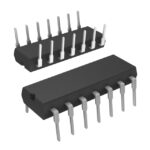 LF347N/NOPB

The activity of extra discounts on wholesale prices is in full swing…
Please fill in your contact information and we will send you the latest wholesale price list.