ChipApex | Global Electronic Components Supplier

SEARCH
Search Product
Search Post
— IC芯片 | 连接器 | 传感器 | 被动器件 —
Search productSearch post
— IC芯片 | 连接器 | 传感器 | 被动器件 —
Consult the customer manager about the wholesale price.
consultation hotline:86-132-6715-2157
email:[email protected]
Contact the product manager for consultation. One-stop consultation is available.
Do you want a lower wholesale price? Please send us your inquiry and we will reply immediately.
The LF444CN is a quad low-power JFET input operational amplifier manufactured by Texas Instruments. It features a gain-bandwidth product of 1 MHz and a slew rate of 1 V/µs. The device operates on a power supply range of 6 V to 36 V, with a maximum dual supply voltage of 18 V. Input characteristics include an input offset voltage of 5 mV, input bias current of 50 pA, and input voltage noise density of 35 nV/√Hz. Common-mode rejection ratio is specified at 100 dB. Each channel provides an output current of 14 mA while consuming 600 µA of operating supply current. The component is housed in a 14-pin MDIP package.
Verify the specific suffix designation against the manufacturer's latest documentation to confirm pinout compatibility and electrical tolerances. Ensure the procurement source provides valid RoHS compliance certificates as required by project specifications. Cross-reference the date code and lot number with the distributor's traceability records to guarantee component authenticity and storage history integrity before final acquisition.
Select this component when a quad amplifier topology is required alongside JFET input characteristics for high impedance buffering. Compare the 1 MHz gain-bandwidth product against application signal frequencies to ensure adequate phase margin. Evaluate the 1 V/µs slew rate against maximum output voltage swing requirements to prevent distortion in dynamic signal paths during circuit design.
This part belongs to the LF444 family of low-power JFET input operational amplifiers produced by Texas Instruments. The family includes variants such as the LF441 (single), LF442 (dual), and LF444 (quad). These devices share common architectural features including JFET input stages and internal frequency compensation, designed to offer a balance between low power consumption and moderate speed performance for general-purpose analog applications.
The LF444CN/NOPB serves as a direct replacement variant maintaining identical electrical specifications and pinout compatibility. Verify that substitute components from other manufacturers match the 14-pin DIP package dimensions and thermal characteristics to ensure mechanical fit within existing PCB layouts without redesigning the footprint.
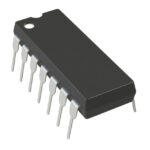 LF444CN

The activity of extra discounts on wholesale prices is in full swing…
Please fill in your contact information and we will send you the latest wholesale price list.