ChipApex | Global Electronic Components Supplier

SEARCH
Search Product
Search Post
— IC芯片 | 连接器 | 传感器 | 被动器件 —
Search productSearch post
— IC芯片 | 连接器 | 传感器 | 被动器件 —
Consult the customer manager about the wholesale price.
consultation hotline:86-132-6715-2157
email:[email protected]
Contact the product manager for consultation. One-stop consultation is available.
Do you want a lower wholesale price? Please send us your inquiry and we will reply immediately.
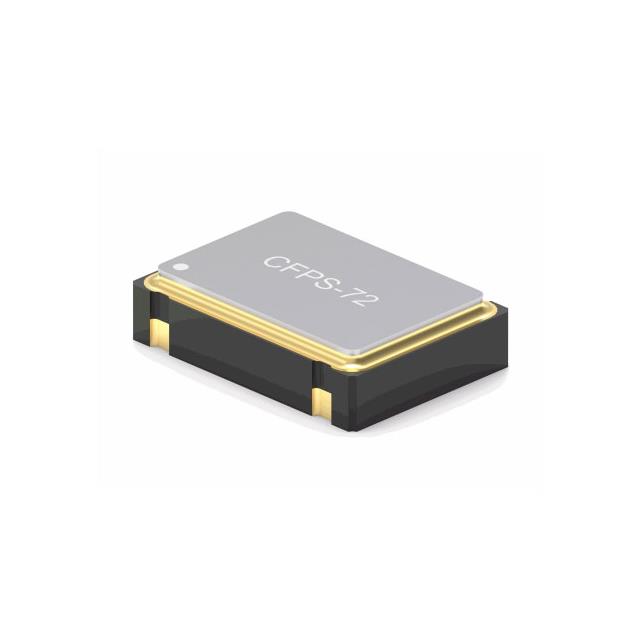
The LFSPXO025365 is a standard clock oscillator from the CFPS-72 series by IQD Frequency Products. It operates at a nominal frequency of 10 MHz with a frequency stability of ±25 ppm over the operating temperature range. The device supports HCMOS and TTL output formats and functions within a supply voltage range of 4.75 V to 5.25 V, with a nominal voltage of 5 V. It features a 4-SMD, no lead surface-mount package measuring 5.0 mm x 3.2 mm x 1.4 mm. The component is rated for an operating temperature range of -40°C to +85°C and includes a standby (power down) function.
Verify the specific suffix codes against the manufacturer's official datasheet to ensure correct voltage, frequency, and package variations. Confirm RoHS compliance status and lead-free specifications prior to ordering. Cross-reference the part number with current availability lists as inventory levels fluctuate. Ensure the selected variant matches the required operating temperature range and output load requirements for the target application design.
Select this oscillator when a 10 MHz reference with ±25 ppm stability is required for 5V logic systems. Consider the 4-SMD package size for layout constraints. Evaluate the HCMOS/TTL output compatibility with downstream components. Verify that the -40°C to +85°C range meets environmental conditions. Compare against other CFPS series variants if different frequencies or stabilities are needed.
This component belongs to the CFPS-72 series of standard crystal oscillators from IQD Frequency Products. The series offers various frequencies and stabilities in surface-mount packages. The LFSPXO025365 specifically targets 5V applications requiring reliable clock signals. It complements other IQD products like the CFPS-73 and LFSPXO series for broader timing solutions.
Direct substitutes may include other 10 MHz HCMOS oscillators with similar ±25 ppm stability and 5V operation. Check pinout compatibility for direct replacement. Verify package dimensions match the 4-SMD form factor. Consult IQD documentation for cross-reference lists or equivalent series parts.
 LFSPXO025365

The activity of extra discounts on wholesale prices is in full swing…
Please fill in your contact information and we will send you the latest wholesale price list.