ChipApex | Global Electronic Components Supplier

SEARCH
Search Product
Search Post
— IC芯片 | 连接器 | 传感器 | 被动器件 —
Search productSearch post
— IC芯片 | 连接器 | 传感器 | 被动器件 —
Consult the customer manager about the wholesale price.
consultation hotline:86-132-6715-2157
email:[email protected]
Contact the product manager for consultation. One-stop consultation is available.
Do you want a lower wholesale price? Please send us your inquiry and we will reply immediately.
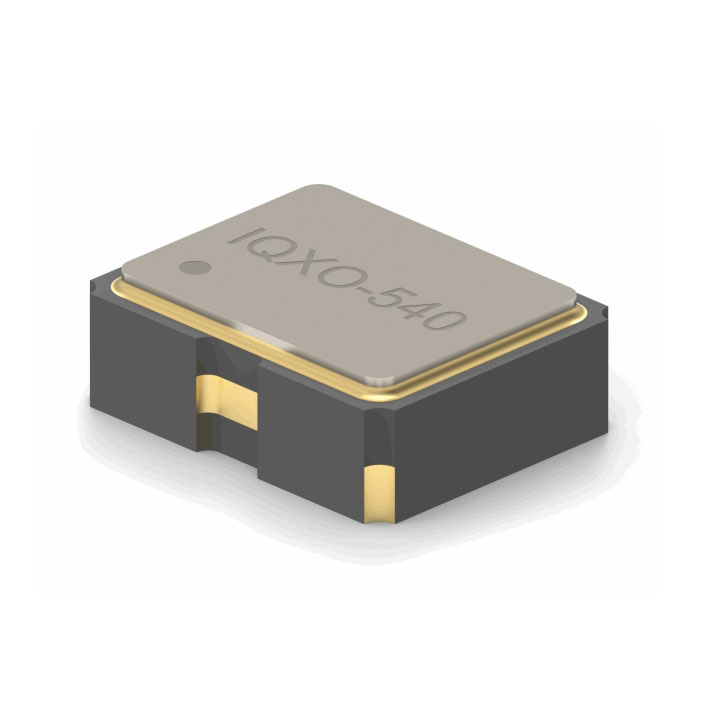
The LFSPXO066629 is a standard CMOS crystal oscillator manufactured by IQD Frequency Products. It operates at a nominal frequency of 16 MHz with a frequency stability of ±50 ppm. The device requires a 3.3V supply voltage and features an enable/disable function for power management. It utilizes a basic crystal resonator and is designed for surface mount installation in a compact 4-SMD, no lead package measuring 2.00mm x 1.60mm with a maximum height of 0.80mm. The operational temperature range spans from -40°C to +85°C.
Verify the specific ordering suffix and reel configuration when sourcing components. Confirm that the received part matches the 16 MHz frequency specification and 3.3V operating voltage requirements. Ensure the package type corresponds to the 4-SMD no-lead form factor. Check for RoHS compliance documentation if required by project specifications. Validate supplier authenticity through authorized distribution channels.
Select this component when a stable 16 MHz reference is required with low power consumption capabilities. The ±50 ppm stability suits applications tolerant of moderate frequency variations. Consider the enable pin utility for systems requiring dynamic power saving modes. Evaluate the small footprint against available board space constraints. Compare thermal performance within the specified -40°C to 85°C range against environmental conditions.
This oscillator belongs to the IQD Frequency Products standard XO series, designed for reliable timing in commercial and industrial electronics. The manufacturer specializes in frequency control solutions with extensive experience in quartz crystal technologies. This specific model represents a common solution for microcontroller clock inputs and synchronous data bus operations.
Cross-reference compatible oscillators offering identical 16 MHz frequency, CMOS output, and 3.3V supply voltage. Verify pin compatibility and mechanical dimensions match the 4-SMD no-lead footprint. Ensure equivalent frequency stability and temperature range specifications are met by potential substitutes.
 LFSPXO066629

The activity of extra discounts on wholesale prices is in full swing…
Please fill in your contact information and we will send you the latest wholesale price list.