 ChipApex | Global Electronic Components Supplier
SEARCH
Search Product
Search Post
— IC芯片 | 连接器 | 传感器 | 被动器件 —
Search productSearch post
— IC芯片 | 连接器 | 传感器 | 被动器件 —
Consult the customer manager about the wholesale price.
consultation hotline:86-132-6715-2157
email:[email protected]
Contact the product manager for consultation. One-stop consultation is available.
Do you want a lower wholesale price? Please send us your inquiry and we will reply immediately.
The LM224J is a quad operational amplifier manufactured by Texas Instruments, formerly National Semiconductor. It features four independent high-gain amplifiers with internal frequency compensation. The device operates on a single power supply ranging from 3 V to 32 V or dual supplies of ±1.5 V to ±16 V. Key electrical parameters include a gain-bandwidth product of 1.2 MHz, a slew rate of 500 mV/µs, and an input offset voltage of 5 mV. It draws 1.4 mA of operating current and provides 20 mA output current per channel. The component is housed in a 14-CDIP package and supports rail-to-rail input operation.
Verify the manufacturer designation as Texas Instruments for the LM224J part number, noting the historical association with National Semiconductor. Confirm the specific package type is CDIP-14 and check RoHS compliance status, as sources indicate non-compliance for this specific variant. Ensure the datasheet matches the 1.2 MHz gain-bandwidth specification rather than the generic 1.3 MHz found in some family summaries.
Select the LM224J when a low-power quad op-amp with wide single-supply operation is required. It is suitable for applications needing rail-to-rail input performance without shutdown functionality. Consider the 14-CDIP package for through-hole mounting requirements. Verify that the 5 mV input offset voltage and 1.2 MHz bandwidth meet the circuit's precision and speed constraints compared to other members of the LM224 family.
The LM224J belongs to the LM224 series of low-power quad operational amplifiers. This series is characterized by its ability to operate from a wide range of supply voltages while maintaining low power consumption. The 'J' suffix typically denotes a specific temperature range and package configuration within the broader LM224 product line, distinguishing it from commercial or industrial variants.
LM324J: Offers similar quad op-amp functionality but may have different electrical specifications regarding offset voltage and bandwidth. LM124J: Provides comparable performance with potentially wider temperature ranges. Verify pin compatibility and electrical parameter alignment before substitution.
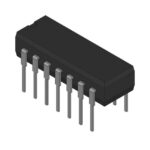 LM224J
The activity of extra discounts on wholesale prices is in full swing…
Please fill in your contact information and we will send you the latest wholesale price list.






