 ChipApex | Global Electronic Components Supplier
SEARCH
Search Product
Search Post
— IC芯片 | 连接器 | 传感器 | 被动器件 —
Search productSearch post
— IC芯片 | 连接器 | 传感器 | 被动器件 —
Consult the customer manager about the wholesale price.
consultation hotline:86-132-6715-2157
email:[email protected]
Contact the product manager for consultation. One-stop consultation is available.
Do you want a lower wholesale price? Please send us your inquiry and we will reply immediately.
The LM248D is a quad operational amplifier manufactured by STMicroelectronics, housed in a 14-pin SOIC package. It features four independent high-gain amplifiers with internal compensation. Key electrical parameters include a maximum static current of 4.5mA, an input offset voltage (Vos) of 1mV, and a slew rate of 500mV/μs. The gain bandwidth product (GBP) is 1MHz, with an input bias current of 30nA. The device supports a maximum output current of 25mA and offers a common-mode rejection ratio (CMRR) of 90dB. Operating temperatures range from -25°C to +85°C.
Verify the manufacturer designation on the component marking, as the 'LM' prefix may indicate legacy Texas Instruments design or STMicroelectronics production under license. Confirm the 'D' suffix corresponds to the SOIC-14 package variant. Ensure the operating temperature range meets system requirements, as industrial grades differ from commercial variants. Cross-reference the specific datasheet version to validate pinout and electrical limits against the intended application constraints.
Select this component when a quad configuration is necessary to replace discrete UA741 units, reducing board space and component count. The low supply current per amplifier makes it suitable for battery-operated or energy-constrained designs. Verify that the 1MHz gain-bandwidth product and 500mV/μs slew rate satisfy the signal frequency and speed requirements of the target circuit before finalizing the design.
This part belongs to the LM24x series of quad operational amplifiers, which are engineered to provide characteristics identical to the classic UA741 but with improved power efficiency. The series allows designers to utilize four amplifiers with a total supply current comparable to a single UA741 unit. This family is widely used in general-purpose analog applications where moderate performance and low cost are prioritized over high-speed precision.
The LM248D is functionally compatible with the LM348D and LM148D. These parts share the same pinout and electrical characteristics, differing primarily in temperature rating ranges. Designers can substitute these parts directly without schematic modifications, provided the environmental conditions align with the specific grade's specifications.
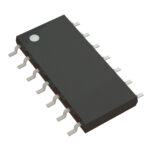 LM248D
The activity of extra discounts on wholesale prices is in full swing…
Please fill in your contact information and we will send you the latest wholesale price list.





