 ChipApex | Global Electronic Components Supplier
SEARCH
Search Product
Search Post
— IC芯片 | 连接器 | 传感器 | 被动器件 —
Search productSearch post
— IC芯片 | 连接器 | 传感器 | 被动器件 —
Consult the customer manager about the wholesale price.
consultation hotline:86-132-6715-2157
email:[email protected]
Contact the product manager for consultation. One-stop consultation is available.
Do you want a lower wholesale price? Please send us your inquiry and we will reply immediately.
The LM3411AN-3.3 is a precision secondary regulator and driver manufactured by National Semiconductor, now part of Texas Instruments. It functions as a post-regulator for isolated power supplies, utilizing an optocoupler to receive feedback signals from the primary side. The device regulates the output voltage with high accuracy, specifically set to 3.3V in this variant. It integrates a driver capable of controlling external synchronous rectification MOSFETs to improve efficiency. The component operates within a standard industrial temperature range and is housed in a plastic dual-in-line package suitable for through-hole mounting.
Verify that the specific suffix indicates the fixed 3.3V output configuration, as other variants exist for different voltages. Confirm the manufacturer source is National Semiconductor or Texas Instruments to ensure authenticity. Check for the presence of the 'NOPB' suffix if lead-free compliance is required for your assembly process. Ensure the package type matches your PCB footprint requirements before ordering.
Select this component when designing isolated topologies that demand high secondary-side regulation accuracy. It is suitable for applications where synchronous rectification is implemented to boost efficiency. Consider the thermal performance of the associated MOSFETs and the optocoupler drive capability. Ensure the input voltage range of the primary side aligns with the system requirements.
The LM3411 series belongs to the family of precision secondary regulators developed by National Semiconductor. These devices are engineered to replace traditional diode-based rectification with active synchronous control. The LM3411AN-3.3 is a specific variant offering a fixed 3.3V output, distinguishing it from adjustable or other fixed-voltage versions within the same product line.
Public confirmed substitute part numbers include LM3411AM5-3.3 and LM3411-L. Verify pin compatibility and thermal characteristics before substitution. Note that some alternatives may require adjustments to the surrounding circuitry due to differences in drive strength or packaging.
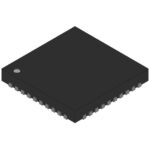 LM3411AN-3.3
The activity of extra discounts on wholesale prices is in full swing…
Please fill in your contact information and we will send you the latest wholesale price list.





