 ChipApex | Global Electronic Components Supplier

SEARCH
Search Product
Search Post
— IC芯片 | 连接器 | 传感器 | 被动器件 —
Search productSearch post
— IC芯片 | 连接器 | 传感器 | 被动器件 —
Consult the customer manager about the wholesale price.
consultation hotline:86-132-6715-2157
email:[email protected]
Contact the product manager for consultation. One-stop consultation is available.
Do you want a lower wholesale price? Please send us your inquiry and we will reply immediately.
The LM3424QMH/NOPB is an automotive-grade, constant current N-channel MOSFET controller designed for LED lighting applications. It supports a VIN range from 4.5 V to 75 V and features a high-side adjustable current sense with a 2-Ω, 1-A peak internal MOSFET. The device operates within a temperature range of -40°C to +125°C and is housed in a 20-HTSSOP package. Key electrical characteristics include configurable output currents from 20 mA to 150 mA via external resistors without requiring a microcontroller.
Verify the specific suffix (NOPB) indicates lead-free compliance as per Texas Instruments standards. Confirm the package type matches the design requirement, specifically the 20-HTSSOP form factor. Ensure the application voltage does not exceed the 75 V maximum input rating. Check for AEC-Q100 qualification requirements if deploying in strict automotive environments. Validate that the thermal management solution accommodates the device's operating temperature limits up to 125°C.
Select this component when designing high-voltage LED drivers requiring precise constant current control without microcontroller intervention. It is suitable for buck and boost topologies where high-side sensing is preferred. Consider the 1-A peak MOSFET capability for driving moderate power LEDs. Ensure the system can accommodate the adjustable switch frequency and synchronization features if noise immunity or multi-phase operation is required.
This part belongs to the LM3424 family of constant current controllers. It is specifically qualified for automotive use under the LM3424-Q1 designation. The NOPB suffix denotes a non-phosphorus bromide, lead-free variant manufactured by Texas Instruments. It serves as a versatile driver for various LED architectures in demanding environments.
Direct substitutes may include other LM3424 variants with different package options or suffixes, provided they maintain the same functional specifications and automotive qualification status. Verify pin compatibility and thermal performance before substitution.
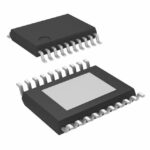 LM3424QMH/NOPB

The activity of extra discounts on wholesale prices is in full swing…
Please fill in your contact information and we will send you the latest wholesale price list.





