ChipApex | Global Electronic Components Supplier
SEARCH
Search Product
Search Post
— IC芯片 | 连接器 | 传感器 | 被动器件 —
Search productSearch post
— IC芯片 | 连接器 | 传感器 | 被动器件 —
Consult the customer manager about the wholesale price.
consultation hotline:86-132-6715-2157
email:[email protected]
Contact the product manager for consultation. One-stop consultation is available.
Do you want a lower wholesale price? Please send us your inquiry and we will reply immediately.
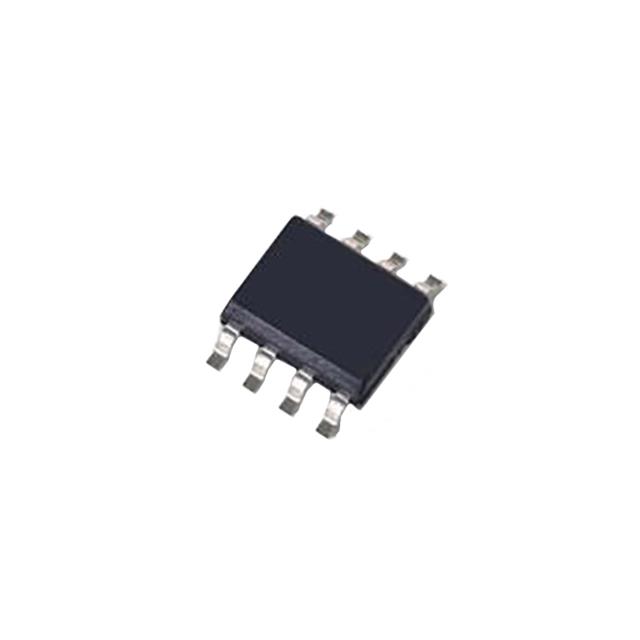
The LSK389ASOIC8LTB ROHS is an ultra-low noise monolithic dual N-channel JFET amplifier from Linear Integrated Systems. It features a typical voltage noise of 1.6 nV/√Hz at 1 kHz and 3.2 nV/√Hz at 10 Hz. The device offers four IDSS grades, with the 'A' grade ranging from 2.6 to 6.5 mA. Key electrical parameters include a maximum gate-to-source breakdown voltage of 40 V, a typical transconductance of 20 mS, and a typical input capacitance of 25 pF. The component utilizes a SOIC-8L surface-mount package.
Verify the specific IDSS grade suffix matches the required current range, as the base part number covers multiple grades. Confirm the SOIC-8L package type and RoHS compliance status align with design requirements. Ensure the ordering code corresponds to the correct manufacturer revision and packaging format specified by Linear Integrated Systems.
Select the LSK389A grade for lower saturation drain current applications requiring 2.6 to 6.5 mA. Consider the monolithic dual structure for circuits demanding precise matching without manual selection. Evaluate the 40 V breakdown voltage for headroom needs in high transient content amplifiers compared to single JFET alternatives.
The LSK389 series serves as an improved second-source replacement for the Toshiba 2SK389. It is positioned as the industry's lowest noise dual N-channel JFET, offering better performance than individual discrete components. The LSK170 is the equivalent single N-channel version within the same product family.
The LSK389 is documented as an improved second-source replacement for the Toshiba 2SK389. Designers should verify pinout compatibility and electrical parameter overlaps when substituting these components in existing designs.
No, the LSK389 is 100% tested to guarantee the elimination of burst (RTN or popcorn) noise entirely.
The typical voltage noise is 1.6 nV/√Hz at 1 kHz and 3.2 nV/√Hz at 10 Hz.
The monolithic dual construction provides tighter IDSS matching and better thermal tracking compared to using individual discrete JFETs.
 LSK389ASOIC8LTB ROHS
The activity of extra discounts on wholesale prices is in full swing…
Please fill in your contact information and we will send you the latest wholesale price list.