 ChipApex | Global Electronic Components Supplier

SEARCH
Search Product
Search Post
— IC芯片 | 连接器 | 传感器 | 被动器件 —
Search productSearch post
— IC芯片 | 连接器 | 传感器 | 被动器件 —
Consult the customer manager about the wholesale price.
consultation hotline:86-132-6715-2157
email:[email protected]
Contact the product manager for consultation. One-stop consultation is available.
Do you want a lower wholesale price? Please send us your inquiry and we will reply immediately.
The LT3840EUFE#TRPBF is a high voltage synchronous step-down switching regulator controller from Analog Devices Inc. It operates from an input supply of 2.5V to 60V and supports up to 20A output current. The device features a programmable switching frequency ranging from 50kHz to 1MHz, with a typical operating point at 1MHz. It utilizes a QFN-38 package and includes shutdown functionality. The quiescent current is specified at 20uA. This component is designed for non-isolated buck applications within a temperature range of -40°C to +125°C.
Verify the specific suffix TRPBF indicates tape and reel packaging when ordering. Confirm the QFN-38 package dimensions match your PCB footprint requirements. Ensure the thermal pad connection is properly designed for heat dissipation given the 20A capability. Check for RoHS compliance status if required by your manufacturing standards. Validate that the 1MHz switching frequency aligns with your EMI constraints.
Select this controller when input voltages exceed standard 48V limits but remain below 60V. Consider the 20A current capability for heavy load applications. Evaluate the need for external MOSFETs as this is a controller, not an integrated switch. Compare against lower voltage variants if input sources are strictly limited to 24V or less. Assess thermal management needs due to the high current density in the QFN-38 package.
The LT3840 series represents Analog Devices' solution for high-voltage DC-DC conversion. The EUFE variant denotes the commercial temperature grade version. It belongs to the broader family of synchronous buck controllers designed for robust industrial performance. The part is often evaluated using demo boards like the DC1909A to verify circuit design before mass production.
LT3840IUFE#TRPBF offers the same electrical specifications but is rated for the extended industrial temperature range (-40°C to +125°C) compared to the commercial grade EUFE variant. LT3840MPFE#PBF provides military-grade reliability and testing. Direct pin-compatible substitutes within the same family maintain functional equivalence while altering environmental ratings.
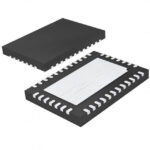 LT3840EUFE#TRPBF

The activity of extra discounts on wholesale prices is in full swing…
Please fill in your contact information and we will send you the latest wholesale price list.





