 ChipApex | Global Electronic Components Supplier

SEARCH
Search Product
Search Post
— IC芯片 | 连接器 | 传感器 | 被动器件 —
Search productSearch post
— IC芯片 | 连接器 | 传感器 | 被动器件 —
Consult the customer manager about the wholesale price.
consultation hotline:86-132-6715-2157
email:[email protected]
Contact the product manager for consultation. One-stop consultation is available.
Do you want a lower wholesale price? Please send us your inquiry and we will reply immediately.
The LT8390EFE is a synchronous four-switch buck-boost DC/DC controller from Analog Devices. It supports an input voltage range of 4V to 60V and operates with switching frequencies between 150kHz and 650kHz. The device utilizes a proprietary peak buck/peak boost current mode control scheme to regulate output voltage, input current, or output current when the input voltage is above, below, or equal to the output voltage. It features integrated soft-start, frequency synchronization, and cycle-by-cycle current limiting within a 28-pin TSSOP-EP package.
Verify the specific suffix (e.g., #PBF) against the manufacturer's official ordering guide to confirm RoHS compliance and lead time requirements. Ensure the selected variant matches the required temperature grade and packaging format for your production line. Cross-reference the datasheet revision date to ensure all electrical characteristics align with your design specifications before finalizing procurement.
Select this component when designing circuits that require regulation across input voltages both higher and lower than the target output. The fixed frequency operation simplifies filter design compared to variable-frequency controllers. Consider the thermal performance of the exposed pad package for high-power applications exceeding 100W. Verify that the external inductor selection supports the required ripple current without saturation at the maximum operating duty cycle.
This part belongs to the LT8390 family of high-power synchronous buck-boost controllers. It serves as the control core for evaluation boards such as the DC2431A, which demonstrates up to 300W of power delivery. The controller is designed to replace traditional multi-stage solutions by integrating four switches into a single IC, reducing component count and board space while maintaining high efficiency across wide input ranges.
LT8390IFE#PBF: Offers a wider switching frequency range (190kHz to 630kHz). LT8390AEFE#PBF: Supports higher switching frequencies up to 2.1MHz. Verify pin compatibility and thermal requirements when substituting these variants.
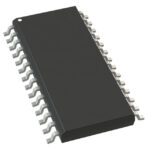 LT8390EFE

The activity of extra discounts on wholesale prices is in full swing…
Please fill in your contact information and we will send you the latest wholesale price list.





