 ChipApex | Global Electronic Components Supplier
SEARCH
Search Product
Search Post
— IC芯片 | 连接器 | 传感器 | 被动器件 —
Search productSearch post
— IC芯片 | 连接器 | 传感器 | 被动器件 —
Consult the customer manager about the wholesale price.
consultation hotline:86-132-6715-2157
email:[email protected]
Contact the product manager for consultation. One-stop consultation is available.
Do you want a lower wholesale price? Please send us your inquiry and we will reply immediately.
The LTC1067-50CS#PBF is a dual, rail-to-rail, very low noise universal switched-capacitor filter building block manufactured by Analog Devices Inc. It integrates two identical second-order sections within a 16-lead narrow SSOP package. The device operates from a single supply ranging from 2.7V to 11V or dual supplies up to ±5.5V. It features a fixed internal clock-to-center frequency ratio of 50:1, allowing center frequencies to be tuned via an external clock source. The typical supply current is approximately 1mA at 3.3V, offering lower power consumption than the standard LTC1067 variant.
Verify the specific suffix CS#PBF against the manufacturer's latest documentation to confirm the commercial temperature grade (0°C to 70°C) and lead-free packaging status. Ensure the ordering information matches the exact pinout and electrical specifications required for the design, as variations exist between the standard LTC1067 and the low-power LTC1067-50 variants.
Select this component when a low-power, dual-channel switched-capacitor filter is required for audio or instrumentation applications. The 50:1 clock ratio allows for higher center frequencies compared to the 100:1 ratio of the standard LTC1067 for a given clock speed. Verify that the application can accommodate the necessary external resistors and clock source to configure the desired filter modes and Q factors.
This part belongs to the LTC1067 family of universal switched-capacitor filters. The LTC1067-50 variant is specifically optimized for lower power consumption, drawing approximately half the current of the standard LTC1067. Both devices share the same rail-to-rail performance and dual-section architecture but differ in their internal clock-to-center frequency ratios and power characteristics.
The standard LTC1067CS#PBF serves as a functional alternative if lower power consumption is not a critical constraint, though it draws significantly more current. Designers must account for the difference in the clock-to-center frequency ratio (100:1 vs 50:1) when substituting components, as this affects the required external clock frequency for a specific cutoff.
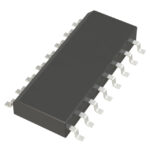 LTC1067-50CS#PBF
The activity of extra discounts on wholesale prices is in full swing…
Please fill in your contact information and we will send you the latest wholesale price list.





