 ChipApex | Global Electronic Components Supplier
SEARCH
Search Product
Search Post
— IC芯片 | 连接器 | 传感器 | 被动器件 —
Search productSearch post
— IC芯片 | 连接器 | 传感器 | 被动器件 —
Consult the customer manager about the wholesale price.
consultation hotline:86-132-6715-2157
email:[email protected]
Contact the product manager for consultation. One-stop consultation is available.
Do you want a lower wholesale price? Please send us your inquiry and we will reply immediately.
The LTC9111RDE#PBF is an industrial Single-Pair Power over Ethernet (SPoE) Powered Device controller compliant with IEEE 802.3cg standards. It operates within a wide input voltage range of 2.3V to 60V and supports the Serial Communication Classification Protocol (SCCP). The device integrates a 3.5V standby regulator and features pin-programmable class configuration. It drives two external N-channel MOSFETs for polarity correction and load switching, ensuring full operating voltage is applied only upon valid PD connection. The component is housed in a 12-lead MSOP package.
Verify that the specific suffix 'RDE' corresponds to the 12-lead MSOP or DFN 4mm x 3mm package variant as documented in official Analog Devices specifications. Confirm that the part number matches the exact thermal and mechanical requirements for the intended industrial environment. Ensure compliance with RoHS directives and check for any recent product change notices regarding manufacturing sites or materials. Cross-reference the ordering information with the manufacturer's current catalog to confirm availability status.
Select this controller for applications requiring strict adherence to IEEE 802.3cg SPoE protocols. The integrated standby regulator and micropower classification reduce external component count and reservoir capacitor requirements. Consider the wide input voltage range and SCCP support for robust system design. Evaluate the pin-programmable class configuration flexibility against specific power budget constraints. Ensure the external MOSFET selection aligns with the charge pump drive capabilities for efficient polarity correction.
The LTC9111 series serves as a specialized controller for Single-Pair Ethernet power delivery in industrial environments. It enables efficient power transmission over a single twisted pair, reducing cabling complexity compared to traditional four-pair PoE solutions. The device focuses on safety and efficiency by managing classification and load switching through external MOSFETs. This approach minimizes energy waste during the identification phase and ensures reliable operation in demanding automated settings.
No public confirmed substitute part numbers are available.
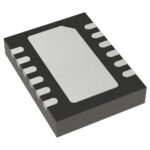 LTC9111RDE#PBF
The activity of extra discounts on wholesale prices is in full swing…
Please fill in your contact information and we will send you the latest wholesale price list.







