 ChipApex | Global Electronic Components Supplier

SEARCH
Search Product
Search Post
— IC芯片 | 连接器 | 传感器 | 被动器件 —
Search productSearch post
— IC芯片 | 连接器 | 传感器 | 被动器件 —
Consult the customer manager about the wholesale price.
consultation hotline:86-132-6715-2157
email:[email protected]
Contact the product manager for consultation. One-stop consultation is available.
Do you want a lower wholesale price? Please send us your inquiry and we will reply immediately.
The MAX232EEWE+ is a dual driver/receiver RS-232 transceiver manufactured by Analog Devices Inc./Maxim Integrated. It operates on a single +5V supply, utilizing an integrated charge pump to generate the required ±10V levels without external bipolar supplies. The device supports full-duplex communication with two drivers and two receivers, achieving data rates up to 120kbps under standard loading conditions. It features high electrostatic discharge protection rated at ±15kV via the Human Body Model. The component is housed in a 16-pin Wide SOIC package and is designed for operation within an extended temperature range of -40°C to +85°C.
Verify the specific suffix 'G1Z' against official manufacturer documentation, as local distributor listings may not explicitly detail its functional impact. Confirm that the ordering information aligns with the 16-pin Wide SOIC package variant. Ensure compliance with RoHS directives as indicated in the product attributes. Cross-reference the datasheet revision to confirm the electrical characteristics match the procured batch.
Select this component when designing systems that require RS-232 communication powered solely by a +5V rail. The wide operating temperature range makes it suitable for industrial applications where ambient temperatures fluctuate significantly. Consider the 120kbps data rate limit when determining suitability for high-speed serial interfaces. Verify that the external capacitor requirements for the charge pump fit within the board space constraints.
This part belongs to the MAX232E family of RS-232 transceivers, which are enhanced versions providing superior ESD protection compared to standard models. The 'E' designation indicates the ruggedized version capable of withstanding high static discharge events. It serves as a bridge between TTL/CMOS logic levels and RS-232 signaling standards, facilitating communication between microcontrollers and legacy serial ports.
The MAX232EESE+ is a verified substitute offering identical electrical performance in a narrow SOIC package. Designers must account for the pinout compatibility and physical footprint differences when transitioning from the Wide SOIC to the Narrow SOIC variant.
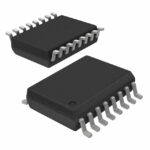 MAX232EEWE+

The activity of extra discounts on wholesale prices is in full swing…
Please fill in your contact information and we will send you the latest wholesale price list.







