 ChipApex | Global Electronic Components Supplier

SEARCH
Search Product
Search Post
— IC芯片 | 连接器 | 传感器 | 被动器件 —
Search productSearch post
— IC芯片 | 连接器 | 传感器 | 被动器件 —
Consult the customer manager about the wholesale price.
consultation hotline:86-132-6715-2157
email:[email protected]
Contact the product manager for consultation. One-stop consultation is available.
Do you want a lower wholesale price? Please send us your inquiry and we will reply immediately.
The MAX232EIDWG4 is a dual driver and receiver RS-232 transceiver manufactured by Texas Instruments. It operates within a supply voltage range of 4.5 V to 5.5 V, with a typical operating voltage of 5 V. The device supports full-duplex communication at data rates up to 250 kb/s. It features two drivers and two receivers, housed in a 16-pin SOIC package. The component functions reliably across an extended industrial temperature range from -40°C to +85°C. Key electrical specifications include a propagation delay of 0.5 µs, an operating supply current of 10 mA, and ESD protection rated at 15 kV.
Verify the specific suffix 'G4' indicates lead-free and RoHS compliance status as per Texas Instruments documentation. Confirm the package variant matches the SOIC-16 physical dimensions required for your PCB footprint. Check for End-of-Life (EOL) notifications, as availability may be restricted compared to active production parts. Ensure the ordering quantity aligns with tube packaging constraints if applicable.
Select this component when a 5-V supply is available and RS-232 compatibility is mandatory. Compare against the MAX3232 series if operation from a 3-V supply is required, as pinouts may differ. Verify that the 250 kb/s data rate meets the system's throughput requirements. Consider the SOIC-16 package size relative to board space limitations compared to smaller alternatives like the MAX232AIEPE.
This part belongs to the MAX232E family of dual RS-232 transceivers. It serves as a standard interface solution for legacy serial communication protocols. The 'E' designation typically denotes an extended temperature range variant. The 'WG4' suffix identifies the specific tape-and-reel or tube packaging and manufacturing lot details defined by Texas Instruments.
The MAX232DRG4 is a direct functional substitute with identical electrical characteristics but differs in packaging format (tape and reel vs. tube). The MAX232EIDR offers the same performance in a tape-and-reel configuration. Verify pin compatibility before substitution.
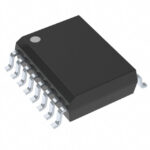 MAX232EIDWG4

The activity of extra discounts on wholesale prices is in full swing…
Please fill in your contact information and we will send you the latest wholesale price list.






