 ChipApex | Global Electronic Components Supplier

SEARCH
Search Product
Search Post
— IC芯片 | 连接器 | 传感器 | 被动器件 —
Search productSearch post
— IC芯片 | 连接器 | 传感器 | 被动器件 —
Consult the customer manager about the wholesale price.
consultation hotline:86-132-6715-2157
email:[email protected]
Contact the product manager for consultation. One-stop consultation is available.
Do you want a lower wholesale price? Please send us your inquiry and we will reply immediately.
The MAX232EIDWR is a dual RS-232 driver and receiver manufactured by Texas Instruments, designed for EIA/TIA-232-F communication standards. It operates within a supply voltage range of 4.5 V to 5.5 V, with a typical operating voltage of 5 V. The device supports data rates up to 250 kb/s and features full-duplex transmission capabilities. It integrates two drivers and two receivers in a single package. The component functions reliably across an extended industrial temperature range from -40°C to +85°C. Power consumption is characterized by a maximum operating supply current of 10 mA. It utilizes a 16-pin SOIC surface-mount package.
Verify the specific suffix 'G4' compliance if lead-free certification is required, as this indicates RoHS compliance. Confirm the package type matches the design footprint, specifically the 16-SOIC dimensions. Check for end-of-life status or obsolescence notices from Texas Instruments before finalizing procurement plans. Ensure the operating temperature range meets the environmental requirements of the target application.
Select this component when a dual-channel RS-232 transceiver with high ESD immunity is needed. Compare against the standard MAX232DR if lower cost is prioritized over the extended temperature range and higher data rate. Ensure the PCB layout accommodates the required external coupling capacitors for the internal charge pump circuit. Verify that the 16-SOIC package width fits the available board space constraints.
This part belongs to the MAX232E family, which offers improved performance over the original MAX232 series. It shares the same pinout and functionality as other variants like the MAX232EIDR but may differ in packaging or specific electrical characteristics such as data rate and temperature range. It is a widely used interface solution for legacy serial communication protocols.
The TRS232EIDWR is documented as a parameter-equivalent replacement. Other compatible parts include the MAX232EIDWRG4 and MAX232EIDR, though verification of specific suffix differences is necessary.
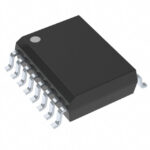 MAX232EIDWR

The activity of extra discounts on wholesale prices is in full swing…
Please fill in your contact information and we will send you the latest wholesale price list.







