 ChipApex | Global Electronic Components Supplier

SEARCH
Search Product
Search Post
— IC芯片 | 连接器 | 传感器 | 被动器件 —
Search productSearch post
— IC芯片 | 连接器 | 传感器 | 被动器件 —
Consult the customer manager about the wholesale price.
consultation hotline:86-132-6715-2157
email:[email protected]
Contact the product manager for consultation. One-stop consultation is available.
Do you want a lower wholesale price? Please send us your inquiry and we will reply immediately.
The MAX232EWE is a dual driver and receiver RS-232 transceiver designed for EIA/TIA-232E and V.28/V.24 communication interfaces. It operates from a single +5V supply, utilizing internal charge-pump circuitry to generate the required ±10V levels without external bipolar supplies. The device supports full-duplex data transmission at rates up to 200 kbps. It features two drivers and two receivers with TTL/CMOS-compatible inputs and outputs. Electrical specifications include an input voltage operating range of ±30V for receivers and output voltage swings of ±5V to ±8V for drivers under load. The component functions within a temperature range of -40°C to +85°C.
Verify the specific suffix 'E' confirms the extended industrial temperature range of -40°C to +85°C against the manufacturer's ordering guide. Confirm the 'WE' designation corresponds to the 16-pin Wide SOIC package dimensions. Ensure compliance with current RoHS directives by checking the latest datasheet revision before finalizing procurement specifications.
Select this component when designing systems that require RS-232 connectivity but lack access to negative voltage rails. The integrated charge pump simplifies board layout by reducing external capacitor requirements compared to older generations. Verify that the 200 kbps data rate meets the application's throughput needs and that the wide operating temperature range aligns with the environmental conditions.
This part belongs to the MAX220–MAX249 family of +5V-powered multichannel RS-232 drivers and receivers. The family offers various pin counts and channel configurations to suit different interface complexity requirements. The MAX232 variant specifically provides a standard dual-channel solution widely adopted in legacy serial communication designs.
The MAX232AWE is a direct functional replacement within the same package and specification profile. Other family members like the MAX232EEWE offer identical electrical performance with potentially different packaging options. Cross-referencing the specific suffix codes is necessary to ensure temperature and package compatibility.
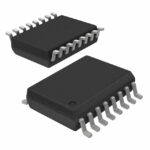 MAX232EWE

The activity of extra discounts on wholesale prices is in full swing…
Please fill in your contact information and we will send you the latest wholesale price list.





