 ChipApex | Global Electronic Components Supplier

SEARCH
Search Product
Search Post
— IC芯片 | 连接器 | 传感器 | 被动器件 —
Search productSearch post
— IC芯片 | 连接器 | 传感器 | 被动器件 —
Consult the customer manager about the wholesale price.
consultation hotline:86-132-6715-2157
email:[email protected]
Contact the product manager for consultation. One-stop consultation is available.
Do you want a lower wholesale price? Please send us your inquiry and we will reply immediately.
The MAX232IDWR is a dual RS-232 transceiver manufactured by Texas Instruments, designed for standard communication protocols. It operates within a supply voltage range of 4.5 V to 5.5 V, with a typical operating voltage of 5 V. The device supports data rates up to 120 kb/s and provides full-duplex communication capabilities. It integrates two drivers and two receivers in a single package. The component is housed in an SOIC-16 surface-mount package and functions reliably across an industrial temperature range from -40°C to +85°C. It draws approximately 10 mA of working power supply current.
Verify the suffix 'R' indicates reel packaging when ordering. Confirm the specific variant matches the required temperature grade and package type. Ensure compatibility with existing board layouts for SOIC-16 footprints. Check for RoHS compliance status if environmental regulations apply to the final assembly. Validate that the supplier provides authentic Texas Instruments components to avoid counterfeit risks.
Select this component when a dual-channel RS-232 interface is required for 5-V logic systems. It is suitable for applications needing full-duplex communication without external voltage generation components. Consider the SOIC-16 package constraints for PCB space. Evaluate the 120 kb/s speed limit against system requirements. Ensure the operating environment stays within the specified -40°C to +85°C range for optimal performance.
This part belongs to the MAX232 family of interface ICs from Texas Instruments. It is a widely used solution for converting TTL/CMOS levels to RS-232 standards. The IDWR suffix denotes the industrial temperature range and tape-and-reel packaging format. It serves as a foundational component for legacy serial communication interfaces in modern electronic designs.
Direct substitutes include other MAX232 variants such as MAX232IDW or MAX232ISE. Cross-reference pinouts and electrical specifications before substitution. Verify that alternative packages match the physical footprint requirements. Ensure thermal characteristics align with the application's environmental conditions.
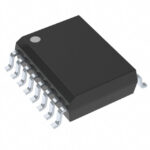 MAX232IDWR

The activity of extra discounts on wholesale prices is in full swing…
Please fill in your contact information and we will send you the latest wholesale price list.





