 ChipApex | Global Electronic Components Supplier

SEARCH
Search Product
Search Post
— IC芯片 | 连接器 | 传感器 | 被动器件 —
Search productSearch post
— IC芯片 | 连接器 | 传感器 | 被动器件 —
Consult the customer manager about the wholesale price.
consultation hotline:86-132-6715-2157
email:[email protected]
Contact the product manager for consultation. One-stop consultation is available.
Do you want a lower wholesale price? Please send us your inquiry and we will reply immediately.
The MAX233ACWP-T is a dual driver/receiver RS-232 transceiver from the MAX220–MAX249 family, manufactured by Analog Devices/Maxim Integrated. It operates on a single +5V supply (4.5V to 5.5V) and features integrated charge-pump circuitry that eliminates the need for external bipolar ±12V supplies or discrete capacitors. The device provides full duplex communication with a data rate of up to 120kbps. It includes a shutdown mode that reduces power dissipation to less than 5µW. The component is housed in a 16-pin Wide SOIC package and supports an operating temperature range of 0°C to +70°C.
Verify the specific suffix 'T' indicates tape-and-reel packaging when sourcing this part number. Confirm the 'AC' designation aligns with the required commercial temperature range of 0°C to +70°C for your application environment. Ensure compatibility with the 16-pin Wide SOIC footprint during PCB layout verification.
Select this component when minimizing board space is critical due to its integrated capacitor design. It is suitable for systems restricted to a single +5V power rail where generating ±12V is impractical. Consider the 120kbps data rate limit and the commercial temperature range when evaluating against higher-speed or industrial-grade alternatives.
This device belongs to the MAX220–MAX249 family of +5V-powered multichannel RS-232 drivers and receivers. The family offers various channel configurations and packages to address different interface needs while maintaining the benefit of single-supply operation and reduced component count.
Compatible substitutes within the same family include the MAX232A and MAX233E. Verify pinout compatibility and ensure the replacement meets the specific voltage and temperature requirements of the target system.
No, the MAX233 integrates the necessary capacitors internally, eliminating the need for external discrete components.
The device supports a maximum data rate of 120kbps under normal operating conditions.
In shutdown mode, the device reduces power dissipation to less than 5µW, making it ideal for battery-powered systems.
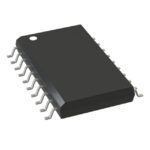 MAX233ACWP-T

The activity of extra discounts on wholesale prices is in full swing…
Please fill in your contact information and we will send you the latest wholesale price list.







