 ChipApex | Global Electronic Components Supplier

SEARCH
Search Product
Search Post
— IC芯片 | 连接器 | 传感器 | 被动器件 —
Search productSearch post
— IC芯片 | 连接器 | 传感器 | 被动器件 —
Consult the customer manager about the wholesale price.
consultation hotline:86-132-6715-2157
email:[email protected]
Contact the product manager for consultation. One-stop consultation is available.
Do you want a lower wholesale price? Please send us your inquiry and we will reply immediately.
The MAX3051ESA+TG05 is a +3.3V single-supply CAN transceiver designed for nonautomotive applications. It supports data rates up to 1Mbps in high-speed mode and up to 500kbps in slope-control mode, which reduces EMI. The device features a wide common-mode range of -7V to +12V, exceeding ISO 11898 standards. Supply current is 35µA (dominant) and 2µA (recessive), dropping to 8µA in standby and under 1µA in shutdown. It includes ±12kV HBM ESD protection, thermal shutdown at +160°C, and operates from -40°C to +85°C.
Verify the specific suffix 'G05' against official manufacturer documentation to confirm its exact meaning regarding tape-and-reel specifications or lot traceability. Ensure the component matches the standard SO-8 package outline provided in the datasheet. Confirm RoHS compliance status associated with the '+' designation.
Select this component for 3.3V microcontroller systems requiring CAN communication without automotive-grade fault protection. Use slope-control mode to minimize EMI on unshielded cables. Verify that the -7V to +12V common-mode range meets the system's electrical environment requirements.
The MAX3051 is part of the Maxim Integrated CAN transceiver family, optimized for low-power industrial use. It interfaces between CAN controllers and physical bus lines using differential signaling. The device simplifies power design by eliminating the need for dual supplies or level shifters in modern 3.3V embedded systems.
MAX3051ESA+T is a verified equivalent part number offering identical functionality and pinout in the same SO-8 package. Verify compatibility if substituting due to availability constraints.
Connect a resistor between the RS pin and ground. The resistance value determines the maximum transmission speed, ranging from 40kbps to 500kbps.
If the junction temperature exceeds +160°C, the driver outputs enter a high-impedance state. The function disables again once the temperature drops below 135°C.
Yes, while slope-control mode allows unshielded cables, high-speed mode operation requires shielded twisted pair cables to avoid EMI problems.
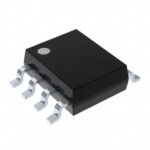 MAX3051ESA+TG05

The activity of extra discounts on wholesale prices is in full swing…
Please fill in your contact information and we will send you the latest wholesale price list.





