 ChipApex | Global Electronic Components Supplier

SEARCH
Search Product
Search Post
— IC芯片 | 连接器 | 传感器 | 被动器件 —
Search productSearch post
— IC芯片 | 连接器 | 传感器 | 被动器件 —
Consult the customer manager about the wholesale price.
consultation hotline:86-132-6715-2157
email:[email protected]
Contact the product manager for consultation. One-stop consultation is available.
Do you want a lower wholesale price? Please send us your inquiry and we will reply immediately.
The MAX3058ASA is a high-speed CAN transceiver manufactured by Analog Devices Inc./Maxim Integrated, designed for robust communication in automotive and industrial environments. It supports data rates up to 1 Mb/s and operates within a supply voltage range of 4.5 V to 5.5 V. The device features low supply current consumption of 40 mA during operation and provides ESD protection rated at 12 kV. It functions reliably across an extended temperature range from -40°C to +125°C, with a maximum power dissipation of 470 mW. Packaged in an SOIC-8 surface-mount format, it integrates one driver and one receiver for half-duplex CAN protocol support.
Verify the specific suffix 'A' indicates the commercial temperature grade variant when sourcing replacements. Confirm RoHS compliance status through official manufacturer documentation prior to integration. Ensure ordering quantities align with standard reel or cut-tape availability constraints defined by the distributor. Cross-reference the full part number including tape-and-reel indicators if automated assembly is required.
Select this component when a 1 Mb/s data rate is sufficient for the application's bandwidth requirements. Choose this transceiver over higher-speed variants if lower electromagnetic interference and reduced power consumption are prioritized. Ensure the system voltage remains within the 4.5 V to 5.5 V window to maintain signal integrity. Verify that the SOIC-8 package dimensions fit the available PCB footprint constraints.
This device belongs to the MAX305x family of CAN transceivers, which are engineered for high reliability in noisy environments. It shares architectural similarities with other Maxim Integrated interface ICs but is distinct in its specific speed and power profile. The series is widely recognized for its balance between performance and cost-effectiveness in standard CAN networks.
Direct substitutes include the MAX3051ASA for 500 kb/s operation or the MAX3052ASA for 1 Mb/s with different pinout configurations. Verify compatibility with existing termination resistors and biasing networks when swapping between these variants.
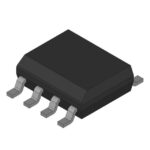 MAX3058ASA

The activity of extra discounts on wholesale prices is in full swing…
Please fill in your contact information and we will send you the latest wholesale price list.





