 ChipApex | Global Electronic Components Supplier
SEARCH
Search Product
Search Post
— IC芯片 | 连接器 | 传感器 | 被动器件 —
Search productSearch post
— IC芯片 | 连接器 | 传感器 | 被动器件 —
Consult the customer manager about the wholesale price.
consultation hotline:86-132-6715-2157
email:[email protected]
Contact the product manager for consultation. One-stop consultation is available.
Do you want a lower wholesale price? Please send us your inquiry and we will reply immediately.
The MAX3082ESA+T is a half-duplex RS-485/RS-422 transceiver manufactured by Analog Devices Inc./Maxim Integrated. It integrates one driver and one receiver within an 8-pin SOIC package. The device supports data transmission rates up to 115kbps with slew-rate-limited drivers to minimize electromagnetic interference. It operates on a single +5V supply, drawing a typical quiescent current of 375µA. Key electrical parameters include a receiver input resistance of 96kΩ (1/8-unit load), allowing up to 256 devices on the bus. The unit features fail-safe circuitry that guarantees a logic-high receiver output when inputs are open or shorted.
Verify component authenticity through authorized distributors or direct manufacturer channels. Confirm the specific suffix matches the required temperature range and packaging format. Check for RoHS compliance status as indicated in official documentation. Ensure the part number corresponds to the exact pinout and functional specifications required for the design.
Select this component for half-duplex RS-485 or RS-422 applications requiring low-speed data transmission up to 115kbps. The integrated slew-rate limiting makes it suitable for environments sensitive to electromagnetic interference. Verify that the system voltage aligns with the specified +5V operating range and that the thermal requirements fit the intended application environment.
This device belongs to the MAX3080–MAX3089 family of high-speed transceivers designed for RS-485/RS-422 communication standards. The family includes variants supporting different duplex modes and data rates. The MAX3082 specifically addresses half-duplex requirements with reduced slew rates, distinguishing it from full-duplex counterparts like the MAX3080 or higher-speed models like the MAX3086.
Pin-compatible alternatives within the same family include the MAX3085 and MAX3088, which share the same 8-pin configuration but support higher data rates of 500kbps and 10Mbps respectively. Verify that the increased speed capabilities do not introduce unwanted EMI if the original design relied on the MAX3082's specific slew-rate limitations.
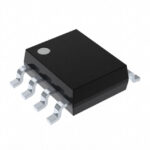 MAX3082ESA+T
The activity of extra discounts on wholesale prices is in full swing…
Please fill in your contact information and we will send you the latest wholesale price list.





