 ChipApex | Global Electronic Components Supplier
SEARCH
Search Product
Search Post
— IC芯片 | 连接器 | 传感器 | 被动器件 —
Search productSearch post
— IC芯片 | 连接器 | 传感器 | 被动器件 —
Consult the customer manager about the wholesale price.
consultation hotline:86-132-6715-2157
email:[email protected]
Contact the product manager for consultation. One-stop consultation is available.
Do you want a lower wholesale price? Please send us your inquiry and we will reply immediately.
The MAX3084EEPA+ is a full-duplex RS-422/RS-485 transceiver from the MAX3080E–MAX3089E family, manufactured by Analog Devices Inc./Maxim Integrated. It operates on a single +5V supply and features fail-safe circuitry that guarantees a logic-high receiver output when inputs are open or shorted. The device supports data rates up to 500kbps with enhanced slew-rate limiting to minimize EMI and reflections. It includes ±15kV Human Body Model ESD protection on all I/O pins and offers low-power shutdown mode. Packaged in an 8-pin Plastic DIP (PDIP), it is designed for industrial control local area networks and level translation applications.
Verify the component authenticity by checking the manufacturer marking against official datasheet specifications. Confirm the package type matches the required PCB footprint. Ensure the temperature grade suffix corresponds to the intended operating environment. Cross-reference the ordering information to validate the specific variant being procured.
Select this model for full-duplex applications requiring reliable performance up to 500kbps. The integrated slew-rate limiting makes it suitable for EMI-sensitive environments where signal integrity is critical. Consider the PDIP package constraints for through-hole mounting requirements. Evaluate the need for fail-safe operation in noisy industrial settings before finalizing the design choice.
This component belongs to the MAX3080E–MAX3089E series of high-speed transceivers. The MAX3084E variant specifically provides full-duplex communication capabilities with fixed 500kbps slew-rate limiting. It shares pinout compatibility with industry-standard parts like the 75180 but includes additional internal features for improved noise immunity and power management.
The MAX3084E is pin-compatible with the standard 75180 transceiver. Designers replacing legacy components should verify that the enhanced ESD protection and fail-safe thresholds meet the system requirements. Alternative variants within the MAX3080E family may offer different data rates or duplex modes if the application demands differ.
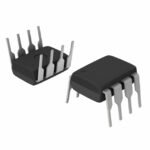 MAX3084EEPA+
The activity of extra discounts on wholesale prices is in full swing…
Please fill in your contact information and we will send you the latest wholesale price list.





