 ChipApex | Global Electronic Components Supplier
SEARCH
Search Product
Search Post
— IC芯片 | 连接器 | 传感器 | 被动器件 —
Search productSearch post
— IC芯片 | 连接器 | 传感器 | 被动器件 —
Consult the customer manager about the wholesale price.
consultation hotline:86-132-6715-2157
email:[email protected]
Contact the product manager for consultation. One-stop consultation is available.
Do you want a lower wholesale price? Please send us your inquiry and we will reply immediately.
The MAX3098EBCEE is a triple RS-422/RS-485 receiver manufactured by Analog Devices Inc./Maxim Integrated. It operates on a single +3V to +5.5V supply and supports data rates up to 32Mbps. The device features fault-detection circuitry with independent alarm outputs for each receiver channel, identifying open-circuit, short-circuit, low differential voltage, and common-mode range violations. It includes a capacitor-programmable delayed fault output (ALARMD) to prevent erroneous alarms during slow edge rates. ESD protection ratings are ±15kV (Human Body Model), ±15kV (IEC 1000-4-2 Air-Gap), and ±8kV (Contact Discharge). The component is housed in a 16-pin QSOP package and functions within an operating temperature range of 0°C to +70°C.
Verify the specific ordering suffix EBCEE to confirm the 16-pin QSOP package and commercial temperature range (0°C to +70°C). Ensure compatibility with system requirements for triple-channel reception and fault detection logic levels. Cross-reference the manufacturer's current production status and availability through authorized distribution channels before finalizing procurement plans.
Select this component when designing motor-control feedback systems or industrial interfaces requiring simultaneous monitoring of three differential signal pairs. The integrated fault detection eliminates the need for external diagnostic circuitry. Verify that the application environment stays within the specified 0°C to +70°C operating range and utilizes a 3V to 5.5V power supply.
This part belongs to the MAX3097E/MAX3098E family of high-speed receivers. While the MAX3097E provides standard fault thresholds, the MAX3098E variant offers tighter differential fault detection limits, making it suitable for applications requiring more sensitive signal integrity monitoring. Both share identical pinouts and functional architectures.
The MAX3097EBCEE serves as a direct functional substitute within the same family, differing primarily in fault detection threshold specifications rather than physical interface or pin configuration.
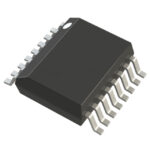 MAX3098EBCEE
The activity of extra discounts on wholesale prices is in full swing…
Please fill in your contact information and we will send you the latest wholesale price list.







