 ChipApex | Global Electronic Components Supplier
SEARCH
Search Product
Search Post
— IC芯片 | 连接器 | 传感器 | 被动器件 —
Search productSearch post
— IC芯片 | 连接器 | 传感器 | 被动器件 —
Consult the customer manager about the wholesale price.
consultation hotline:86-132-6715-2157
email:[email protected]
Contact the product manager for consultation. One-stop consultation is available.
Do you want a lower wholesale price? Please send us your inquiry and we will reply immediately.
The MAX3181EEUK-T is a single RS-232 line receiver manufactured by Analog Devices Inc. (Maxim Integrated). It operates from a +3.0V to +5.5V supply and consumes only 0.5µA of supply current. The device guarantees true RS-232 performance up to a data rate of 1.5Mbps. It features an INVALID output that indicates valid RS-232 signals at the receiver input, making it suitable for applications requiring automatic system wake-up. The standard inverting ROUT output converts RS-232 signals to CMOS logic levels. The receiver inputs are protected against electrostatic discharge up to ±15kV using the Human Body Model and ±15kV via IEC 1000-4-2 Air-Gap Discharge. It is housed in a compact SOT23-5 package and operates within a temperature range of -40°C to +85°C.
Verify the specific ordering suffix 'T' corresponds to tape-and-reel packaging when sourcing components. Confirm the manufacturer designation as Analog Devices Inc. or Maxim Integrated to ensure authenticity. Cross-reference the full part number MAX3181EEUK-T with official distributor catalogs to validate availability and lead times before finalizing procurement plans.
Select the MAX3181EEUK-T when an invalid signal detection feature is required for automatic system wake-up capabilities. This component is appropriate for space-constrained designs due to its SOT23-5 footprint. Ensure the application requires a standard inverting output rather than a noninverting configuration, which is provided by the MAX3182E/MAX3183E variants.
The MAX3181EEUK-T belongs to the MAX3180E–MAX3183E family of single RS-232 receivers. These devices are designed for minimal RS-232 communications in cost-sensitive and space-limited environments. The family shares identical pinouts and core electrical characteristics, differing primarily in output functionality such as enable controls or invalid signal indicators.
The MAX3180EEUK-T, MAX3182EEUK-T, and MAX3183EEUK-T are pin-compatible members of the same series. Substitution requires verifying if the specific output type (inverting vs. noninverting) and control features (INVALID vs. EN) match the original circuit design requirements.
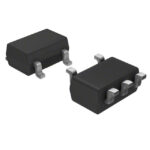 MAX3181EEUK-T
The activity of extra discounts on wholesale prices is in full swing…
Please fill in your contact information and we will send you the latest wholesale price list.







