 ChipApex | Global Electronic Components Supplier
SEARCH
Search Product
Search Post
— IC芯片 | 连接器 | 传感器 | 被动器件 —
Search productSearch post
— IC芯片 | 连接器 | 传感器 | 被动器件 —
Consult the customer manager about the wholesale price.
consultation hotline:86-132-6715-2157
email:[email protected]
Contact the product manager for consultation. One-stop consultation is available.
Do you want a lower wholesale price? Please send us your inquiry and we will reply immediately.
The MAX3188EEUT/GH9-T is a single RS-232 transmitter manufactured by Analog Devices Inc./Maxim Integrated, housed in a SOT23-6 package. It operates on dual supplies ranging from ±4.5V to ±6V and consumes 150µA of supply current during normal operation. The device guarantees data transmission up to 250kbps with worst-case loads of 3kΩ in parallel with 1000pF. A shutdown input reduces the supply current to 1µA and forces the transmitter output into a high-impedance state. The component features enhanced ESD protection rated at ±15kV per the Human Body Model and ±8kV via IEC 1000-4-2 Contact Discharge.
Verify the specific suffix GH9-T against official manufacturer documentation to confirm its exact meaning regarding tape-and-reel specifications or regional distribution channels. Ensure compatibility with standard surface-mount assembly processes for the SOT23-6 footprint. Confirm RoHS compliance status through the latest datasheet revision before finalizing procurement orders.
Select this component when designing systems requiring minimal RS-232 communication capabilities within tight physical boundaries. It is suitable for applications needing only a single transmitter channel without integrated receivers. Consider the requirement for external charge pumps if dual ±4.5V to ±6V supplies are not already available in the system architecture.
This part belongs to the MAX3188E/MAX3189E family of low-power RS-232 transmitters. While the MAX3189E variant supports higher speeds up to 1Mbps, the MAX3188E variant is optimized for 250kbps data rates. Both share identical pinouts, packaging, and power management features, differing primarily in their guaranteed maximum data throughput specifications under load conditions.
Direct pin-compatible replacements include other Maxim RS-232 transmitters such as the MAX3226E or MAX3232E, provided they meet the specific voltage and speed requirements. Verify that substitute components offer equivalent ESD protection levels and shutdown functionality to maintain system reliability.
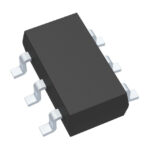 MAX3188EEUT/GH9-T
The activity of extra discounts on wholesale prices is in full swing…
Please fill in your contact information and we will send you the latest wholesale price list.





