 ChipApex | Global Electronic Components Supplier
SEARCH
Search Product
Search Post
— IC芯片 | 连接器 | 传感器 | 被动器件 —
Search productSearch post
— IC芯片 | 连接器 | 传感器 | 被动器件 —
Consult the customer manager about the wholesale price.
consultation hotline:86-132-6715-2157
email:[email protected]
Contact the product manager for consultation. One-stop consultation is available.
Do you want a lower wholesale price? Please send us your inquiry and we will reply immediately.
The MAX3222EEUP+G1Z is a true RS-232 transceiver manufactured by Analog Devices Inc./Maxim Integrated, housed in a 20-pin TSSOP package. It operates on a single +3.0V to +5.5V supply and features two drivers and two receivers for full-duplex communication. The device supports data rates up to 250kbps with ±5V output swings. It incorporates an internal dual charge pump requiring only four 0.1µF capacitors. Key electrical parameters include a typical supply current of 1mA, a shutdown current down to 1µA, and receiver propagation delay of 0.15µs. It provides enhanced ESD protection rated at ±15kV (Human Body Model) and ±8kV (IEC Contact Discharge).
Verify the specific suffix G1Z against the manufacturer's official documentation to confirm packaging configuration and compliance status. Ensure the component source is authorized to guarantee authenticity. Cross-reference the part number with the latest datasheet revision to confirm availability and any potential obsolescence notices prior to procurement.
Select this component when designing systems requiring compatibility with industry-standard MAX242/MAX232 interfaces but operating at lower voltages. It is suitable for applications needing reduced power consumption through shutdown modes. Verify that the required data rate does not exceed 250kbps and that the system voltage falls within the specified 3.0V to 5.5V range.
This device belongs to the MAX3222E family of RS-232 transceivers designed for low-power, single-supply applications. It is functionally compatible with older MAX232 devices but offers improved ESD protection and lower power consumption. The EE designation indicates an extended temperature range of -40°C to +85°C, suitable for industrial environments.
The MAX3222ECUP+ serves as a commercial grade alternative with a 0°C to +70°C temperature range. For higher speed requirements, the MAX3237E offers MegaBaud operation up to 1Mbps. Direct pin-compatible replacements should be verified against the specific package type and temperature rating requirements.
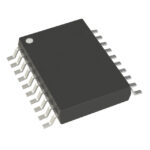 MAX3222EEUP+G1Z
The activity of extra discounts on wholesale prices is in full swing…
Please fill in your contact information and we will send you the latest wholesale price list.





