 ChipApex | Global Electronic Components Supplier
SEARCH
Search Product
Search Post
— IC芯片 | 连接器 | 传感器 | 被动器件 —
Search productSearch post
— IC芯片 | 连接器 | 传感器 | 被动器件 —
Consult the customer manager about the wholesale price.
consultation hotline:86-132-6715-2157
email:[email protected]
Contact the product manager for consultation. One-stop consultation is available.
Do you want a lower wholesale price? Please send us your inquiry and we will reply immediately.
The MAX3225ECAP is a dual RS-232 transceiver manufactured by Analog Devices Inc./Maxim Integrated, housed in a 20-pin SSOP package. It supports data rates up to 1Mbps and operates on a single +3.0V to +5.5V supply. The device features AutoShutdown Plus technology, reducing supply current to 1μA when idle. It includes two drivers and two receivers with full-duplex communication capability. Enhanced ESD protection is rated at ±15kV (Air-Gap), ±8kV (Contact), and ±15kV (Human Body Model). The operating temperature range is specified from 0°C to +70°C.
Verify the specific ordering suffix against official manufacturer documentation to confirm package type and temperature range. Ensure compatibility with existing BIOS or operating system configurations if utilizing AutoShutdown Plus features. Cross-reference pin assignments and electrical characteristics with the latest datasheet revision before finalizing procurement specifications.
Select this component for applications requiring high-speed 1Mbps RS-232 communication within space-constrained designs. The SSOP package offers a compact footprint suitable for portable electronics. Consider the low standby current benefits for battery-operated systems where extended operational life is critical without modifying host software protocols.
This part belongs to the MAX3224E–MAX3227E family of 3V-powered RS-232 transceivers. It shares core architectural features such as the AutoShutdown Plus circuit and dual charge pump with siblings like the MAX3224E and MAX3226E. The primary distinction lies in its guaranteed 1Mbps data rate capability compared to the 250kbps limit of other members in the series.
Public confirmed substitute part numbers: MAX3225ECUP+, MAX3225CPP+.
The device enters shutdown mode when the RS-232 cable is disconnected, peripheral transmitters are inactive, and the driving UART remains inactive for more than 30 seconds.
The INVALID output goes low when no valid RS-232 voltage levels are detected on any receiver input, indicating the absence of an active signal regardless of FORCEON or FORCEOFF states.
No, unused transmitter inputs should be connected to GND or VCC because they do not have internal pullup resistors.
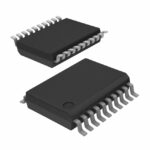 MAX3225ECAP
The activity of extra discounts on wholesale prices is in full swing…
Please fill in your contact information and we will send you the latest wholesale price list.





