 ChipApex | Global Electronic Components Supplier
SEARCH
Search Product
Search Post
— IC芯片 | 连接器 | 传感器 | 被动器件 —
Search productSearch post
— IC芯片 | 连接器 | 传感器 | 被动器件 —
Consult the customer manager about the wholesale price.
consultation hotline:86-132-6715-2157
email:[email protected]
Contact the product manager for consultation. One-stop consultation is available.
Do you want a lower wholesale price? Please send us your inquiry and we will reply immediately.
The MAX3225ECAP+ is a dual RS-232 transceiver manufactured by Analog Devices Inc./Maxim Integrated, housed in a 20-pin SSOP package. It operates within a supply voltage range of +3.0V to +5.5V and supports data rates up to 1Mbps. The device incorporates AutoShutdown Plus technology, reducing the typical supply current to 1μA when idle. It provides enhanced electrostatic discharge protection rated at ±15kV via the Human Body Model and ±8kV via Contact Discharge.
Verify the specific suffix 'CAP+' corresponds to the 20-pin SSOP package with an industrial temperature range of 0°C to +70°C. Confirm RoHS compliance status as indicated by the plus sign. Check for obsolescence notices or production lifecycle changes from Analog Devices before finalizing procurement plans.
Select this component for applications requiring full-duplex RS-232 communication at speeds up to 1Mbps. Ensure the design accommodates the 20-pin SSOP footprint and utilizes four 0.1μF capacitors for the charge pump circuitry. Verify that the system logic levels are compatible with the specified input thresholds.
This part belongs to the MAX3224E through MAX3245E family of low-power RS-232 transceivers. While sharing core features like AutoShutdown Plus and ESD protection, it differs from siblings like the MAX3224E by supporting higher data rates. It serves as a direct interface between UARTs and RS-232 ports in portable electronics.
Public confirmed substitute part numbers include MAX3225ECUP+ (TSSOP package) and MAX3225CPP+ (PDIP package). These variants maintain identical electrical specifications but differ in physical package dimensions and pinout compatibility.
The device enters shutdown mode if no valid signal transition is detected on any receiver or transmitter input for more than 30 seconds, typically occurring when the cable is disconnected or peripherals are inactive.
The READY output asserts high when the internal charge pumps are regulating and the device has generated sufficient voltage to begin transmitting, indicating the transceiver is ready for operation.
No, unused transmitter inputs should not be left floating. They must be connected to either Ground (GND) or VCC to prevent undefined states and ensure proper operation.
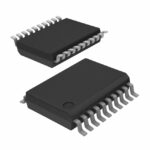 MAX3225ECAP+
The activity of extra discounts on wholesale prices is in full swing…
Please fill in your contact information and we will send you the latest wholesale price list.





