 ChipApex | Global Electronic Components Supplier
SEARCH
Search Product
Search Post
— IC芯片 | 连接器 | 传感器 | 被动器件 —
Search productSearch post
— IC芯片 | 连接器 | 传感器 | 被动器件 —
Consult the customer manager about the wholesale price.
consultation hotline:86-132-6715-2157
email:[email protected]
Contact the product manager for consultation. One-stop consultation is available.
Do you want a lower wholesale price? Please send us your inquiry and we will reply immediately.
The MAX3232CDB is a dual driver and dual receiver RS-232 transceiver manufactured by Texas Instruments. It operates from a single 3 V to 5.5 V power supply, utilizing an internal charge pump and four external capacitors to generate the required ±9 V levels for RS-232 communication. The device supports data rates up to 250 kbps with a maximum output slew rate of 30 V/µs. It features full-duplex operation and includes ±15 kV electrostatic discharge (ESD) protection on all RS-232 lines. The component is housed in a 16-pin SSOP package and is designed for surface-mount installation.
Verify the specific suffix 'DB' corresponds to the SSOP-16 package variant when sourcing. Confirm that the order quantity matches the manufacturer's reel or tube specifications. Ensure the procurement channel provides valid RoHS compliance documentation. Cross-reference the manufacturer part number with distributor catalogs to confirm availability and authenticity before finalizing orders.
Select this component when a dual-channel RS-232 interface is required with integrated ESD protection. It is appropriate for designs operating between 3 V and 5.5 V without needing negative voltage rails. Consider the SSOP-16 package constraints for PCB layout. Verify that the 250 kbps data rate meets the system requirements; higher speed alternatives exist if needed.
The MAX3232CDB belongs to the MAX3232 family of multichannel RS-232 line drivers and receivers. This series is widely used for converting TTL/CMOS logic levels to RS-232 voltages. The 'C' designation typically indicates commercial temperature range performance, while 'DB' specifies the SSOP package type. It serves as a standard solution for legacy serial port implementations in modern low-voltage digital systems.
The MAX3232CDR is a pin-compatible SOIC-16 alternative offering similar electrical characteristics. For wider temperature ranges, consider the MAX3232IDWR variant. Higher-speed options like the SN65C3232 provide 1 Mbps capability but may require different capacitor values. Always verify package dimensions and thermal performance when substituting.
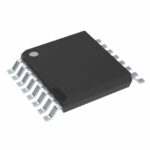 MAX3232CDB
The activity of extra discounts on wholesale prices is in full swing…
Please fill in your contact information and we will send you the latest wholesale price list.







