 ChipApex | Global Electronic Components Supplier
SEARCH
Search Product
Search Post
— IC芯片 | 连接器 | 传感器 | 被动器件 —
Search productSearch post
— IC芯片 | 连接器 | 传感器 | 被动器件 —
Consult the customer manager about the wholesale price.
consultation hotline:86-132-6715-2157
email:[email protected]
Contact the product manager for consultation. One-stop consultation is available.
Do you want a lower wholesale price? Please send us your inquiry and we will reply immediately.
The MAX3232EEAE+TG1Z is a dual driver and receiver RS-232 transceiver manufactured by Analog Devices Inc./Maxim Integrated. It operates from a single 3V to 5.5V supply and supports data rates up to 250kbit/s. The device integrates a dual charge-pump circuit requiring four external capacitors, typically 0.1μF, to generate the necessary ±9V internal voltages for RS-232 signaling. It features ±15kV IEC ESD protection on all serial-port connection pins, including ground. The component provides full-duplex communication with two independent drivers and receivers, making it suitable for interfacing asynchronous controllers with serial connectors in various industrial and computing environments.
Verify the specific ordering suffix against the manufacturer's current documentation to confirm package type and tape-and-reel specifications. Confirm that the component meets the required automotive or industrial qualification standards if applicable to your design. Ensure compatibility with the intended operating temperature range and supply voltage constraints before finalizing procurement.
Select this component when designing systems requiring standard RS-232 interfaces powered by a single 3V or 5V logic supply. It is appropriate for applications needing moderate data rates up to 250kbit/s with integrated ESD protection. Consider alternative high-speed pin-compatible devices if data rates exceeding 1Mbit/s are required for the specific application.
This part belongs to the MAX3232 family of low-power RS-232 transceivers designed for mobile and battery-operated applications. The EE variant typically denotes extended temperature performance, while the +G1Z suffix indicates lead-free and RoHS compliance. The TG1Z suffix specifies the specific tape-and-reel packaging format used for automated surface-mount assembly processes.
The SNx5C3232 is identified as a pin-compatible alternative offering higher speed capabilities up to 1Mbit/s. Verify electrical characteristics and thermal requirements when substituting to ensure system compatibility.
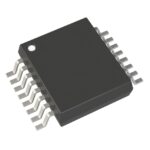 MAX3232EEAE+TG1Z
The activity of extra discounts on wholesale prices is in full swing…
Please fill in your contact information and we will send you the latest wholesale price list.





