 ChipApex | Global Electronic Components Supplier
SEARCH
Search Product
Search Post
— IC芯片 | 连接器 | 传感器 | 被动器件 —
Search productSearch post
— IC芯片 | 连接器 | 传感器 | 被动器件 —
Consult the customer manager about the wholesale price.
consultation hotline:86-132-6715-2157
email:[email protected]
Contact the product manager for consultation. One-stop consultation is available.
Do you want a lower wholesale price? Please send us your inquiry and we will reply immediately.
The MAX3302EETI+ is a fully integrated USB On-the-Go (OTG) transceiver and charge pump manufactured by Analog Devices Inc./Maxim Integrated. It operates with an input supply voltage range of +3V to +4.5V on VCC and supports logic supply voltages from +1.65V to +3.6V on VL. The device provides full-speed (12Mbps) and low-speed (1.5Mbps) data rates compliant with USB 2.0 specifications. It features an internal charge pump that generates a VBUS output voltage between 4.80V and 5.25V while sourcing at least 8mA. The component includes built-in ±15kV ESD protection on the VBUS, ID_IN, D+, and D- terminals. It utilizes an I2C-compatible serial interface for configuration and control. The operating temperature range extends from -40°C to +85°C.
Verify the specific ordering suffix 'T' indicates tape and reel packaging when sourcing this component. Confirm the '+' suffix denotes lead-free package compliance. Ensure the design accommodates the 28-pin TQFN exposed paddle connection requirements. Validate that the system power architecture aligns with the specified VCC and VL voltage ranges.
Select the MAX3302EETI+ over the MAX3301E variant if the application requires the device to power up in the operational VP/VM USB mode rather than shutdown. This feature allows microprocessors to utilize the USB port for power-on boot-up without immediate I2C access. Verify that the 28-pin TQFN package dimensions fit the PCB layout constraints compared to other available packages.
This component belongs to the MAX3301E/MAX3302E family of USB On-the-Go transceivers. The MAX3302E specifically differs from the MAX3301E by its default power-up state, which is operational rather than shutdown. Both devices share identical electrical characteristics and pinouts but offer different initial states to accommodate various embedded host integration strategies.
The MAX3301EETI+ serves as a functional substitute within the same family, differing primarily in its power-up state being shutdown rather than operational. Direct replacement requires verifying that the system firmware can initialize the MAX3301E via I2C immediately after power-on.
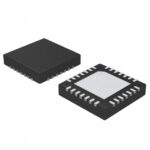 MAX3302EETI+
The activity of extra discounts on wholesale prices is in full swing…
Please fill in your contact information and we will send you the latest wholesale price list.





