 ChipApex | Global Electronic Components Supplier
SEARCH
Search Product
Search Post
— IC芯片 | 连接器 | 传感器 | 被动器件 —
Search productSearch post
— IC芯片 | 连接器 | 传感器 | 被动器件 —
Consult the customer manager about the wholesale price.
consultation hotline:86-132-6715-2157
email:[email protected]
Contact the product manager for consultation. One-stop consultation is available.
Do you want a lower wholesale price? Please send us your inquiry and we will reply immediately.
The MAX3318EEUP+ is a low-power, RS-232-compatible transceiver manufactured by Analog Devices Inc. under the Maxim Integrated brand. It operates from a single +2.5V supply and supports data rates up to 460kbps. The device integrates two drivers and two receivers in a full-duplex configuration. Key electrical specifications include a minimum supply voltage of 2.25V and a maximum of 3V. It features 15kV ESD protection on I/O and logic pins, with a typical operating supply current of 1µA. The component is housed in a 20-pin TSSOP package and functions within an industrial temperature range of -40°C to +85°C.
Verify the specific suffix against official datasheets to confirm pinout compatibility and electrical tolerances. Ensure the procurement channel provides genuine components from Analog Devices or Maxim Integrated. Check for RoHS compliance documentation if required by regional regulations. Confirm package integrity upon receipt to prevent damage to the TSSOP-20 leads during handling.
Select this component when designing circuits that require reliable RS-232 communication at moderate speeds with minimal power draw. It is suitable for applications where space is constrained due to its compact TSSOP-20 footprint. Consider the 15kV ESD rating for environments prone to static discharge. Ensure the system power rail aligns with the +2.5V nominal requirement for optimal performance.
This part belongs to the MAX3318E series of RS-232 transceivers designed for low-voltage operation. It serves as a bridge between microprocessors and RS-232 ports, converting logic-level signals to RS-232 voltages. The series is known for integrating charge pumps internally, eliminating the need for external capacitors in some configurations, though external capacitors are typically required for the internal charge pump operation.
The MAX3318ECUP+ is a verified equivalent variant within the same product family. Verify pin-to-pin compatibility and electrical specifications before substitution. Other alternatives may exist but require careful comparison of supply voltage ranges and ESD protection levels.
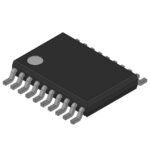 MAX3318EEUP
The activity of extra discounts on wholesale prices is in full swing…
Please fill in your contact information and we will send you the latest wholesale price list.





