 ChipApex | Global Electronic Components Supplier
SEARCH
Search Product
Search Post
— IC芯片 | 连接器 | 传感器 | 被动器件 —
Search productSearch post
— IC芯片 | 连接器 | 传感器 | 被动器件 —
Consult the customer manager about the wholesale price.
consultation hotline:86-132-6715-2157
email:[email protected]
Contact the product manager for consultation. One-stop consultation is available.
Do you want a lower wholesale price? Please send us your inquiry and we will reply immediately.
The MAX3318EIPWR is a dual-driver, dual-receiver RS-232 transceiver manufactured by Texas Instruments. It operates from a single 2.25-V to 3-V supply and supports data rates up to 460 kbps. The device integrates a dual charge pump requiring only four 0.1-μF capacitors. It features ±15-kV ESD protection on RS-232 I/O pins using the IEC 61000-4-2 Air-Gap Discharge method. Supply current is 300 μA during operation and reduces to 1 μA in low-power standby mode with receivers active. The component is housed in a 20-pin TSSOP package and functions within an operating temperature range of -40°C to +85°C.
Verify the specific ordering suffix 'IPWR' corresponds to the TSSOP-20 package variant with industrial temperature ratings (-40°C to +85°C). Confirm RoHS compliance status and lead finish specifications via the latest TI Package Option Addendum before procurement. Ensure the source document matches the SLLS741A datasheet revision for accurate pinout and electrical parameter validation.
Select this component for applications requiring full-duplex RS-232 communication under strict power constraints. The device is suitable where a single low-voltage supply (2.25 V to 3 V) is available, eliminating the need for external negative voltage generators. Consider the 460 kbps maximum data rate and the specific ESD protection requirements for the target interface environment.
The MAX3318EIPWR belongs to the MAX3318E family of RS-232 transceivers designed for low-voltage operation. It shares functional similarities with other Maxim Integrated/Texas Instruments RS-232 parts but is distinct in its specific 2.25-V to 3-V supply range and integrated auto-power-down plus logic. The 'IPWR' designation identifies the industrial temperature grade and tape-and-reel packaging format.
The TRS3318ECPWR is a related Texas Instruments part offering similar functionality but with commercial temperature limits (0°C to 70°C). Verify if the extended industrial temperature range of the MAX3318EIPWR is required for the specific application environment before substituting.
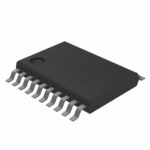 MAX3318EIPWR
The activity of extra discounts on wholesale prices is in full swing…
Please fill in your contact information and we will send you the latest wholesale price list.





