 ChipApex | Global Electronic Components Supplier
SEARCH
Search Product
Search Post
— IC芯片 | 连接器 | 传感器 | 被动器件 —
Search productSearch post
— IC芯片 | 连接器 | 传感器 | 被动器件 —
Consult the customer manager about the wholesale price.
consultation hotline:86-132-6715-2157
email:[email protected]
Contact the product manager for consultation. One-stop consultation is available.
Do you want a lower wholesale price? Please send us your inquiry and we will reply immediately.
The MAX3384ECWN is a dual RS-232 transceiver manufactured by Analog Devices Inc./Maxim Integrated, designed for full-duplex communication. It operates within a supply voltage range of 2.35V to 5.5V and supports data rates up to 250kbps. The device integrates two drivers and two receivers, featuring 15kV ESD protection on both I/O and logic pins. It consumes only 1µA in shutdown mode and utilizes internal charge pumps to eliminate the need for external capacitors. Packaged in an 18-SOIC format, it functions reliably across an operating temperature range of 0°C to +70°C.
Verify the specific suffix against official manufacturer documentation to confirm package type and temperature grade. Ensure compatibility with system voltage levels before integration. Check for RoHS compliance status if environmental regulations apply. Confirm availability through authorized distributors as stock levels fluctuate. Validate pinout configurations against the latest datasheet revision to prevent design errors.
Select this component when designing circuits that require dual-channel RS-232 communication without external boosting capacitors. It is suitable for applications demanding high ESD immunity and low standby power. Compare driver/receiver counts against interface requirements to ensure sufficient channels. Consider the 18-SOIC footprint constraints during PCB layout planning. Evaluate thermal performance within the specified 0°C to +70°C operational window.
This part belongs to the Maxim Integrated MAX3384 family of RS-232 transceivers. It shares functional similarities with other devices in the series but differs in package configuration and specific electrical characteristics. The ECWN suffix denotes the 18-SOIC package variant. It serves as a solution for compact serial communication designs requiring integrated power management.
Direct substitutes include the MAX3384ECWP+ in a TSSOP package or the MAX3384EUB+ in a µMAX package. Verify pin-to-pin compatibility and electrical specifications before substitution. Ensure the alternative part meets the same ESD protection and data rate requirements.
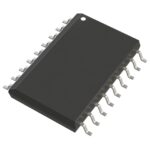 MAX3384ECWN
The activity of extra discounts on wholesale prices is in full swing…
Please fill in your contact information and we will send you the latest wholesale price list.





