 ChipApex | Global Electronic Components Supplier
SEARCH
Search Product
Search Post
— IC芯片 | 连接器 | 传感器 | 被动器件 —
Search productSearch post
— IC芯片 | 连接器 | 传感器 | 被动器件 —
Consult the customer manager about the wholesale price.
consultation hotline:86-132-6715-2157
email:[email protected]
Contact the product manager for consultation. One-stop consultation is available.
Do you want a lower wholesale price? Please send us your inquiry and we will reply immediately.
The MAX3387ECUG+ is a 3V-powered TIA/EIA-232 and V.28/V.24 RS-232 transceiver featuring three receivers and three transmitters. It operates from a +3.0V to +5.5V supply with a maximum data rate of 250kbps. The device includes AutoShutdown Plus, reducing supply current to 1µA when inactive. ESD protection reaches ±15kV via Human Body Model and IEC Air-Gap methods. It utilizes a dual charge pump requiring four 0.1µF capacitors for operation at +3.3V. The component is housed in a 24-pin TSSOP package and supports an operating temperature range of 0°C to +70°C.
Verify the specific suffix 'CUG' corresponds to the commercial temperature range (0°C to +70°C) and lead-free/RoHS compliance status as defined in the manufacturer's ordering information. Confirm that the 24-TSSOP package dimensions match the target PCB land pattern requirements before finalizing procurement orders.
Select this component when interfacing low-voltage microcontrollers with RS-232 ports in space-constrained portable devices. Ensure the system requires only three transmitter/receiver channels. Verify that the application environment remains within the specified 0°C to +70°C operational temperature limits for the ECUG variant.
This part belongs to the MAX3387E family of 3V RS-232 transceivers designed for mobile applications. It shares functional similarities with the MAX3386 but provides an additional transmitter channel. The ECUG designation specifically identifies the commercial grade version packaged in a 24-pin Thin Shrink Small Outline Package.
The MAX3387EEUG+ serves as the industrial temperature range alternative (-40°C to +85°C). Direct pin-compatible substitutes within the same family include the MAX3386 series, though channel counts differ. Verify thermal requirements before substituting between commercial and extended grades.
The INVALID output indicates the presence of valid RS-232 signals on the receiver inputs. It goes high when a valid signal is detected and low when no signal is present, independent of the FORCEON/FORCEOFF control states.
The VL pin sets the logic level for both receiver outputs and transmitter input thresholds. This allows the device to interface directly with host logic supplies as low as 1.8V, facilitating compatibility with mixed-voltage systems.
No. Unused transmitter inputs should be connected to GND or VL to prevent undefined states. The datasheet explicitly notes that transmitter inputs do not have internal pull-up resistors.
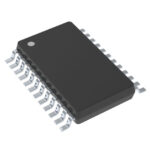 MAX3387ECUG
The activity of extra discounts on wholesale prices is in full swing…
Please fill in your contact information and we will send you the latest wholesale price list.





