 ChipApex | Global Electronic Components Supplier
SEARCH
Search Product
Search Post
— IC芯片 | 连接器 | 传感器 | 被动器件 —
Search productSearch post
— IC芯片 | 连接器 | 传感器 | 被动器件 —
Consult the customer manager about the wholesale price.
consultation hotline:86-132-6715-2157
email:[email protected]
Contact the product manager for consultation. One-stop consultation is available.
Do you want a lower wholesale price? Please send us your inquiry and we will reply immediately.
The MAX3491ESD+ is a low-power, full-duplex transceiver designed for RS-485 and RS-422 communication. It operates from a single 3.0V to 3.6V supply without requiring a charge pump. The device integrates one driver and one receiver within a 14-pin SOIC package. It supports data transmission rates up to 10Mbps with a typical propagation delay of 22ns and skew of 8ns. Supply current typically draws 1.1mA during operation and drops to 2nA in shutdown mode. The unit functions reliably across an industrial temperature range of -40°C to +85°C.
Verify the component matches the exact MAX3491ESD+ designation before integration. Confirm that the 14-pin SOIC package aligns with the target PCB footprint. Ensure the operating environment stays within the specified -40°C to +85°C range. Validate power supply stability between 3.0V and 3.6V to maintain signal integrity. Check datasheet revisions for any updates to absolute maximum ratings or electrical characteristics prior to finalizing the bill of materials.
Select this component when full-duplex RS-485 or RS-422 connectivity is required at speeds up to 10Mbps. The 14-pin SOIC package accommodates separate driver and receiver outputs, distinguishing it from half-duplex variants. Verify that the system requires independent enable controls for the driver and receiver sections. Consider the low shutdown current if power conservation is critical during idle bus periods.
This part belongs to the MAX3483/MAX3485/MAX3486/MAX3488/MAX3490/MAX3491 family of 3.3V transceivers. Unlike the half-duplex MAX3485 or MAX3490 which use 8 pins, the MAX3491 utilizes 14 pins to support full-duplex operation. It shares the same core architecture and low-power features as its siblings but provides simultaneous transmit and receive paths.
The MAX3491EESD+ serves as a direct functional replacement within the same series. Both parts offer identical full-duplex capabilities and pin configurations. Verify that the alternative variant meets the specific ESD protection requirements of the application while maintaining compatibility with the existing 3.3V logic levels.
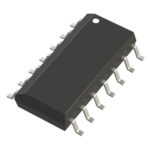 MAX3491ESD+
The activity of extra discounts on wholesale prices is in full swing…
Please fill in your contact information and we will send you the latest wholesale price list.





