 ChipApex | Global Electronic Components Supplier

SEARCH
Search Product
Search Post
— IC芯片 | 连接器 | 传感器 | 被动器件 —
Search productSearch post
— IC芯片 | 连接器 | 传感器 | 被动器件 —
Consult the customer manager about the wholesale price.
consultation hotline:86-132-6715-2157
email:[email protected]
Contact the product manager for consultation. One-stop consultation is available.
Do you want a lower wholesale price? Please send us your inquiry and we will reply immediately.
The MAX6194BESA+ is a precision, micropower, low-dropout series-mode voltage reference manufactured by Analog Devices Inc./Maxim Integrated. It provides a fixed output voltage of 4.5V with an initial accuracy of ±5mV and a maximum temperature coefficient of 5ppm/°C. The device operates within a supply voltage range of 4.7V to 12.6V and draws a maximum quiescent supply current of 35µA. It supports source and sink currents up to 500µA with a dropout voltage of approximately 100mV at full load. The component is housed in an 8-pin SO package and functions reliably across a temperature range of -40°C to +85°C.
Verify the specific suffix 'B' corresponds to the required ±5mV initial accuracy and 5ppm/°C temperature coefficient specifications. Confirm that the 'ES' indicates the standard 8-pin SO package type. Ensure the '+' suffix denotes lead-free and RoHS compliance status as per manufacturer standards. Cross-reference the part number against the official Maxim Integrated ordering guide to validate availability and correct pin configuration.
Select this component when a fixed 4.5V reference is required with tight accuracy constraints. It is suitable for battery-powered applications due to its micropower consumption profile. Consider the internal compensation for stability without external components. Evaluate the 500µA drive capability against the system's load requirements to ensure adequate performance under varying conditions.
This device belongs to the MAX6190–MAX6195/MAX6198 family of precision voltage references. The family shares common architectural features including low dropout characteristics and micropower operation. Variants within the series differ primarily in their fixed output voltages and specific accuracy grades. The MAX6194BESA+ represents a specific output voltage point within this broader portfolio designed for general-purpose precision applications.
Other members of the MAX619x family may serve as alternatives if different output voltages are acceptable. Verify compatibility regarding package dimensions and pinout assignments before substitution. Check datasheet specifications for any differences in thermal hysteresis or long-term stability metrics between potential replacement parts.
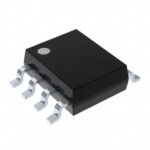 MAX6194BESA

The activity of extra discounts on wholesale prices is in full swing…
Please fill in your contact information and we will send you the latest wholesale price list.





