 ChipApex | Global Electronic Components Supplier

SEARCH
Search Product
Search Post
— IC芯片 | 连接器 | 传感器 | 被动器件 —
Search productSearch post
— IC芯片 | 连接器 | 传感器 | 被动器件 —
Consult the customer manager about the wholesale price.
consultation hotline:86-132-6715-2157
email:[email protected]
Contact the product manager for consultation. One-stop consultation is available.
Do you want a lower wholesale price? Please send us your inquiry and we will reply immediately.
The MAX6220ASA-2.5+ is a low-noise, precision voltage reference utilizing buried-zener technology to deliver a fixed 2.5V output. It operates within an input voltage range of 8V to 40V and supports source/sink currents up to ±15mA. The device guarantees ±0.1% initial accuracy and maintains a temperature coefficient of 20ppm/°C across the automotive range (-40°C to +125°C). Key electrical characteristics include a supply current of approximately 3.3mA, a turn-on settling time of 5µs, and long-term stability of 20ppm over 1000 hours.
Verify the specific suffix 'ASA' confirms the -40°C to +125°C automotive temperature range and SOIC-8 package. Ensure the trailing '+' indicates lead-free/RoHS compliance status as defined by the manufacturer's current standards. Cross-reference the datasheet revision date against your design requirements to confirm parameter consistency.
Select this component when designing circuits requiring stable references under varying thermal conditions in automotive or industrial environments. The wide input voltage range accommodates various supply rails, while the trim pin allows for fine-tuning output accuracy beyond standard tolerance bands if necessary.
This part belongs to the MAX6220 family of low-noise precision voltage references. Other variants in the series provide different fixed output voltages, specifically 4.096V and 5.0V, sharing identical packaging and general electrical characteristics. The ASA designation specifically denotes the extended temperature grade suitable for demanding operational environments.
Direct substitutes within the same family include MAX6220ASA-4.096+ and MAX6220ASA-5.0+. Verify that any alternative component matches the required output voltage and temperature range specifications before implementation.
The device is designed to remain stable with all capacitive loads, supporting values from 0µF to 100µF without oscillation.
The NR (Noise Reduction) pin allows for the connection of an external capacitor, typically 1µF, to further reduce wideband output noise.
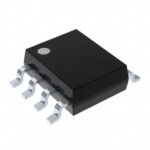 MAX6220ASA-2.5+

The activity of extra discounts on wholesale prices is in full swing…
Please fill in your contact information and we will send you the latest wholesale price list.





