 ChipApex | Global Electronic Components Supplier
SEARCH
Search Product
Search Post
— IC芯片 | 连接器 | 传感器 | 被动器件 —
Search productSearch post
— IC芯片 | 连接器 | 传感器 | 被动器件 —
Consult the customer manager about the wholesale price.
consultation hotline:86-132-6715-2157
email:[email protected]
Contact the product manager for consultation. One-stop consultation is available.
Do you want a lower wholesale price? Please send us your inquiry and we will reply immediately.
The MBT3906DW1T3G is a dual PNP bipolar junction transistor (BJT) array manufactured by onsemi. It features a SOT-363 surface-mount package with six terminals. The device supports a maximum continuous collector current of -200 mA and a collector-emitter voltage rating of -40 V. Key electrical parameters include a collector-base voltage of 40 V, an emitter-base voltage of 5 V, and a transition frequency of 250 MHz. Power dissipation is rated at 150 mW, with a DC current gain (hFE) ranging from 30 to 300. The component operates within a temperature range of -55°C to +150°C and holds AEC-Q101 qualification for automotive applications.
Verify the complete part number includes the 'G' suffix, indicating RoHS compliance, as distributors often list MBT3906DW1T3G. Confirm the specific tape-and-reel quantity matches project requirements. Ensure the supplier provides traceability documentation for AEC-Q101 qualified parts intended for automotive use. Cross-reference the datasheet revision date to ensure compatibility with latest design specifications.
Select this component when space constraints require two matched PNP transistors in a single SOT-363 footprint. Compare power dissipation limits against thermal management capabilities if operating near maximum ratings. Consider the hFE spread for analog applications requiring precise gain matching. Verify that the 40V voltage rating exceeds the maximum circuit transient voltages.
This part belongs to the SMBT/MBT3906 series of small-signal PNP transistors. It serves as the dual-array counterpart to the single-unit MMBT3906. The DW1 designation indicates the specific pinout and internal connection scheme for the SOT-363 package. It is commonly used alongside its NPN counterpart, the MBT3904DW1T3G, for complementary push-pull configurations.
Direct substitutes include the SMBT3906DW1T1G, which shares identical electrical characteristics and pinout. The MBT3906DW1T1 is also compatible but may differ in packaging or qualification status. Verify pinout compatibility before swapping, as some generic dual PNP arrays may have different internal connections.
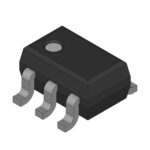 MBT3906DW1T3
The activity of extra discounts on wholesale prices is in full swing…
Please fill in your contact information and we will send you the latest wholesale price list.




