 ChipApex | Global Electronic Components Supplier
SEARCH
Search Product
Search Post
— IC芯片 | 连接器 | 传感器 | 被动器件 —
Search productSearch post
— IC芯片 | 连接器 | 传感器 | 被动器件 —
Consult the customer manager about the wholesale price.
consultation hotline:86-132-6715-2157
email:[email protected]
Contact the product manager for consultation. One-stop consultation is available.
Do you want a lower wholesale price? Please send us your inquiry and we will reply immediately.
The MBT6429DW1T1G is a dual NPN bipolar junction transistor manufactured by onsemi. It utilizes silicon technology and is housed in an SC-70-6 surface-mount package. The device supports a maximum continuous collector current of 200 mA. Key voltage ratings include a collector-emitter voltage (VCEO) of 45 V, a collector-base voltage (VCBO) of 55 V, and an emitter-base voltage (VEBO) of 6 V. Electrical performance specifications feature a DC current gain (hFE) minimum of 500, a collector-emitter saturation voltage of 600 mV, and a transition frequency (fT) of 700 MHz. Thermal characteristics specify a power dissipation of 150 mW and an operating temperature range from -55°C to +150°C.
Verify the complete part number includes the suffix 'G' for lead-free compliance when sourcing. Confirm the manufacturer is onsemi, as distributors may list variations. Ensure the SC-70-6 package matches the design footprint requirements. Check datasheet revisions for any updates to electrical limits or testing conditions before finalizing component selection.
Select this component for applications requiring dual NPN transistors in a minimal footprint. The 700 MHz transition frequency supports moderate-speed switching. Compare the 600 mV saturation voltage against single-transistor alternatives if lower voltage drop is critical. Verify that the 150 mW power dissipation limit accommodates the thermal environment of the target assembly without excessive derating.
This device belongs to the MBT6429DW1 series of dual NPN transistors. It shares similar electrical characteristics with the MMBT6429LT1G but differs in packaging, utilizing SC-70-6 instead of SOT-23. The series is designed for general-purpose use in portable and industrial electronics where board space is limited.
The NSVMMBT6429LT1G offers comparable electrical performance but uses an SOT-23-3 package, requiring PCB layout adjustments. The MMBT6429LT1G is another alternative with identical electrical specs but different packaging. Verify pinout compatibility and thermal resistance differences when substituting.
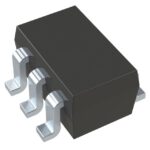 MBT6429DW1T1
The activity of extra discounts on wholesale prices is in full swing…
Please fill in your contact information and we will send you the latest wholesale price list.




