ChipApex | Global Electronic Components Supplier

SEARCH
Search Product
Search Post
Search productSearch post
Consult the customer manager about the wholesale price.
consultation hotline:86-132-6715-2157
email:[email protected]
Contact the product manager for consultation. One-stop consultation is available.
Do you want a lower wholesale price? Please send us your inquiry and we will reply immediately.
MCP621T-E/MNY is listed in the Instrumentation, Op Amps, Buffer Amps range at ChipApex. The manufacturer field lists Microchip Technology. Its product description is IC OPAMP GP 1 CIRCUIT 8TDFN. Review the specifications below when checking this part for your BOM.
The MCP621T-E/MNY is a single-channel operational amplifier from the MCP621 family, manufactured by Microchip Technology. It features a typical gain-bandwidth product of 20 MHz and a slew rate of 30 V/µs. The device operates within a supply voltage range of +2.5V to +5.5V and includes internal mCal self-calibration at power-up to minimize input offset voltage to ±200 µV maximum. It offers rail-to-rail output, unity-gain stability, and an input range including the negative rail. The component is housed in a TDFN-8 package with an exposed thermal pad and supports an extended operating temperature range from -40°C to +125°C.
Verify the specific suffix 'E/MNY' against the manufacturer's official datasheet to confirm the TDFN-8 package type and industrial temperature grade. Ensure the ordering information matches the exact part number for the single-channel variant. Confirm RoHS compliance status through the designated distributor documentation prior to procurement.
Select this component for applications requiring high bandwidth and low offset without external trimming. The integrated calibration reduces initial error, making it suitable for precision signal conditioning. Consider the 2.5 mA quiescent current per channel when evaluating power constraints in battery-operated systems compared to lower-power alternatives.
This part belongs to the MCP621/1S/2/3/4/5/9 family of high-bandwidth operational amplifiers. The family includes single, dual, and quad variants with varying pin counts and calibration features. The MCP621 specifically denotes the single-channel version optimized for general-purpose high-speed applications within the Microchip portfolio.
Direct substitutes include other members of the MCP621 family such as MCP621S, MCP622, MCP623, MCP624, MCP625, and MCP629, provided pin compatibility and channel count requirements are met.
The amplifier utilizes an internal mCal feature that self-calibrates at power-up to minimize input offset voltage. This process can also be triggered manually via the CAL/CS pin if the package variant includes it.
The input common mode voltage range extends from the negative supply rail (VSS) up to approximately VDD minus 1.3V, allowing operation close to the negative rail.
Explore related parts through Amplifiers, Linear, Integrated Circuits (ICs), all product categories.
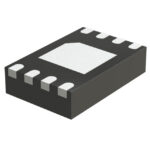 MCP621T-E/MNY

The activity of extra discounts on wholesale prices is in full swing…
Please fill in your contact information and we will send you the latest wholesale price list.