ChipApex | Global Electronic Components Supplier

SEARCH
Search Product
Search Post
Search productSearch post
Consult the customer manager about the wholesale price.
consultation hotline:86-132-6715-2157
email:[email protected]
Contact the product manager for consultation. One-stop consultation is available.
Do you want a lower wholesale price? Please send us your inquiry and we will reply immediately.
MCP624-E/SL is listed in the Instrumentation, Op Amps, Buffer Amps range at ChipApex. The manufacturer field lists Microchip Technology. Its product description is IC OPAMP GP 4 CIRCUIT 14SOIC. Review the specifications below when checking this part for your BOM.
The MCP624-E/SL is a quad operational amplifier from the MCP621/1S/2/3/4/5/9 family, featuring mCal self-calibration for low input offset voltage. It operates on a single supply of +2.5V to +5.5V with rail-to-rail output and an input range including the negative rail. Key electrical parameters include a typical gain-bandwidth product of 20 MHz, a slew rate of 30 V/µs, and a maximum input offset voltage of ±200 µV after calibration. The device provides high output current capability of ±70 mA and supports extended temperature operation from -40°C to +125°C.
Verify the specific package type against the datasheet, as the 'E' suffix denotes the industrial temperature range but does not specify the physical package (e.g., SOIC-14). Confirm the presence of the CAL/CS pin functionality if low-power control is required, noting that this feature is standard for the quad variant. Ensure design compatibility with the specified supply voltage range and thermal resistance values for the selected footprint.
Select this component when high bandwidth and low distortion are required alongside precise DC accuracy. The integrated mCal function reduces the need for external trimming circuits. Consider the quad configuration for space-constrained designs requiring multiple channels. Verify that the application benefits from the rail-to-rail output and negative rail input capabilities within the 2.5V to 5.5V supply window.
This part belongs to the MCP62x series of high-speed, low-noise operational amplifiers designed for single-supply applications. The quad version integrates four independent amplifiers into one package. The family is characterized by its ability to maintain performance across a wide temperature range and its optimization for consumer audio and sensor signal conditioning tasks.
Direct substitutes within the same family include MCP6241, MCP6242, and MCP6249, depending on channel count and CAL/CS pin requirements. Cross-family replacements like MCP631 or MCP651 offer higher bandwidth but may differ in offset voltage and quiescent current specifications.
The MCP624 uses internal mCal circuitry that self-calibrates at power-up. Alternatively, calibration can be triggered manually by toggling the CAL/CS pin from high to low.
No, the device is designed to prevent phase reversal even when the input signal exceeds the common-mode range.
The CAL/CS pin allows users to trigger internal offset calibration and enables a low-power shutdown mode when held high, reducing quiescent current significantly.
Explore related parts through Amplifiers, Linear, Integrated Circuits (ICs), all product categories.
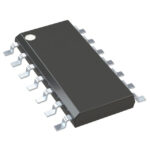 MCP624-E/SL

The activity of extra discounts on wholesale prices is in full swing…
Please fill in your contact information and we will send you the latest wholesale price list.