ChipApex | Global Electronic Components Supplier

SEARCH
Search Product
Search Post
Search productSearch post
Consult the customer manager about the wholesale price.
consultation hotline:86-132-6715-2157
email:[email protected]
Contact the product manager for consultation. One-stop consultation is available.
Do you want a lower wholesale price? Please send us your inquiry and we will reply immediately.
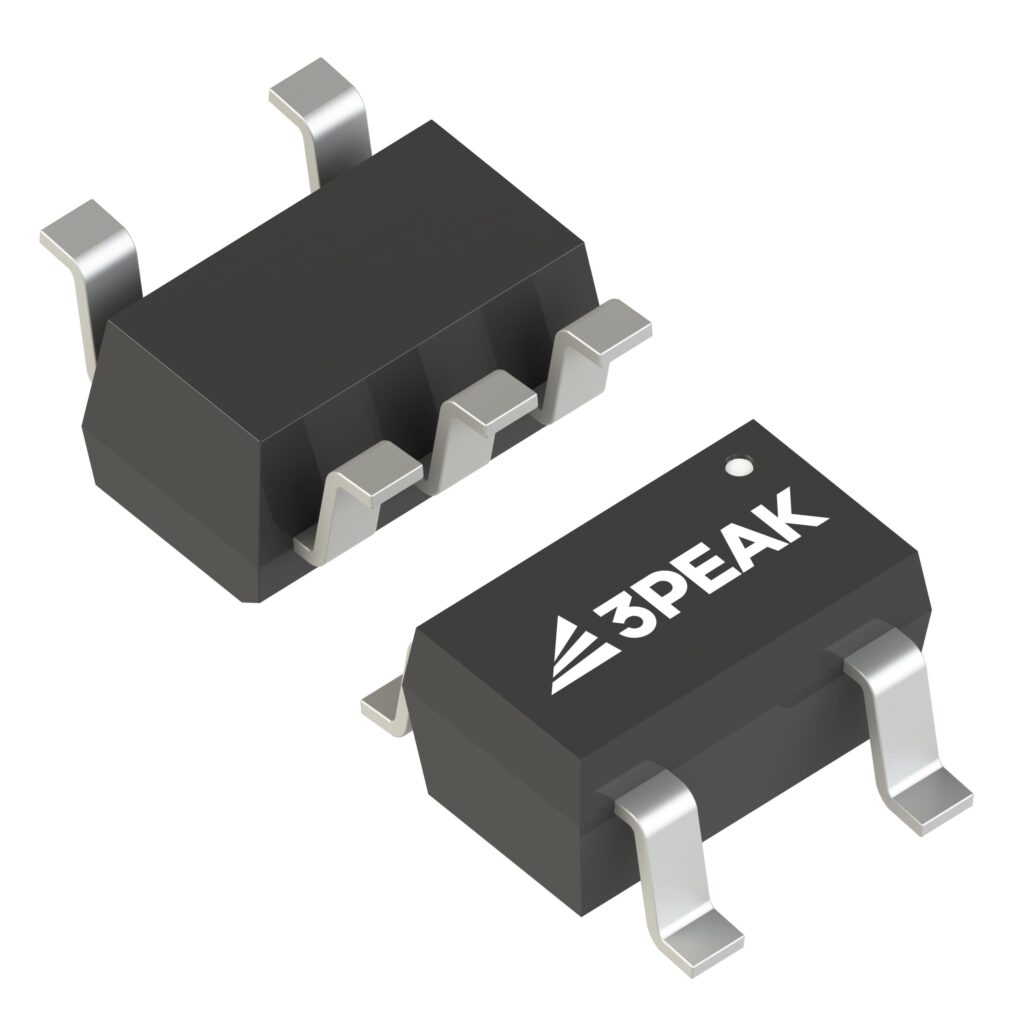
MCP6V66UT-E/LTY is listed in the Instrumentation, Op Amps, Buffer Amps range at ChipApex. The manufacturer field lists Microchip Technology. Its product description is IC OPAMP ZERO-DRIFT 1CIRC SC70-5. Review the specifications below when checking this part for your BOM.
The MCP6V66UT-E/LTY is a single-channel zero-drift operational amplifier from Microchip Technology, housed in an SC-70-5 package. It features a typical gain bandwidth product of 1 MHz and a quiescent current of 80 µA per amplifier. The device operates on a supply voltage range of 1.8 V to 5.5 V with rail-to-rail input and output capabilities. Key electrical specifications include a maximum input offset voltage of ±25 µV, a maximum input offset voltage drift of ±150 nV/°C, and a minimum open-loop gain of 110 dB at 5.5 V. It provides enhanced EMI protection with an EMIRR of 101 dB at 1.8 GHz.
Verify the specific ordering suffix 'LTY' against official Microchip documentation to confirm the exact tape-and-reel packaging configuration and quantity. Ensure the component meets the required extended temperature range specifications (-40°C to +125°C) for your application environment. Cross-reference the datasheet revision to confirm all electrical characteristics align with your design requirements before finalizing procurement.
Select this component when designing circuits that require high DC accuracy without external trimming. It is suitable for applications demanding low power consumption in small form factors. Consider the 1 MHz bandwidth and slew rate for signal processing needs. Verify that the SC-70-5 package fits within the available PCB space constraints.
This part belongs to the MCP6V66/6U/7/9 family of zero-drift operational amplifiers manufactured using an advanced CMOS process. The family includes single, dual, and quad configurations, offering flexibility for various channel counts. The MCP6V66 specifically denotes the single-channel variant, designed for cost-sensitive and space-constrained designs requiring precision amplification.
Compatible substitutes within the same family include the MCP6V66U for alternative single-channel packaging options such as SOT-23. For designs requiring different channel counts or performance levels, consider other members of the MCP6V series like the MCP6V11 or MCP6V71.
The internal oscillator runs at 200 kHz, which is divided by two to produce a chopping clock rate of 100 kHz for modulating DC errors.
The MCP6V66UT-E/LTY is designed to show no input phase reversal even when subjected to significant input overdrive conditions.
Explore related parts through Amplifiers, Linear, Integrated Circuits (ICs), all product categories.
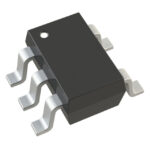 MCP6V66UT-E/LTY

The activity of extra discounts on wholesale prices is in full swing…
Please fill in your contact information and we will send you the latest wholesale price list.