 ChipApex | Global Electronic Components Supplier
SEARCH
Search Product
Search Post
— IC芯片 | 连接器 | 传感器 | 被动器件 —
Search productSearch post
— IC芯片 | 连接器 | 传感器 | 被动器件 —
Consult the customer manager about the wholesale price.
consultation hotline:86-132-6715-2157
email:[email protected]
Contact the product manager for consultation. One-stop consultation is available.
Do you want a lower wholesale price? Please send us your inquiry and we will reply immediately.
The MLX81115KLW-AAD-100-SP is a dual-channel LIN RGB controller from Melexis, designed for automotive ambient lighting. It integrates a 16-bit RISC MCU with 32kB Flash and 16kB ROM, alongside a LIN transceiver compliant with LIN 2.x and SAE J2602 standards. The device features six high-voltage I/Os capable of driving up to 48mA per channel, enabling control of two RGB LEDs. Key electrical parameters include a supply voltage range of 5.5V to 18V, an internal RC oscillator operating at a default 24MHz, and a low standby current of typ 25µA in sleep mode. It operates within an automotive temperature range of -40°C to 125°C.
Verify the specific suffix 'SP' against official Melexis documentation to confirm its exact meaning regarding packaging or quality grade, as standard datasheets may not detail every ordering variant. Ensure compatibility with AEC-Q100 requirements if specified for your application. Confirm moisture sensitivity level and reflow soldering profiles prior to assembly.
Select this component when a single-chip solution for driving two RGB LEDs via LIN is required. It is suitable for applications needing integrated MCU logic, LIN communication, and high-side current regulation. Consider the DFN12 4x4 package for thermal performance and space constraints compared to the SOIC8 version (MLX81112).
This part belongs to the MLX8111x family of second-generation LIN RGB controllers. It serves as the dual-channel counterpart to the single-channel MLX81112, offering additional I/O pins for expanded lighting configurations while maintaining similar core processing and communication capabilities.
For single-channel applications, the MLX81112KDC-AAD-100-RE is a compatible alternative with fewer outputs but a smaller SOIC-8 package. Verify pinout differences and software library compatibility before substituting.
Each high-voltage I/O can provide a constant current of up to 48mA (short term) or 30mA (continuous).
Yes, it supports autoconfiguration according to the bus shunt method as defined in LIN 2.x and SAE J2602.
The typical standby current consumption is 25µA, with a maximum of 50µA in sleep mode.
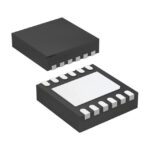 MLX81115KLW-AAD-100-SP
The activity of extra discounts on wholesale prices is in full swing…
Please fill in your contact information and we will send you the latest wholesale price list.






