 ChipApex | Global Electronic Components Supplier

SEARCH
Search Product
Search Post
— IC芯片 | 连接器 | 传感器 | 被动器件 —
Search productSearch post
— IC芯片 | 连接器 | 传感器 | 被动器件 —
Consult the customer manager about the wholesale price.
consultation hotline:86-132-6715-2157
email:[email protected]
Contact the product manager for consultation. One-stop consultation is available.
Do you want a lower wholesale price? Please send us your inquiry and we will reply immediately.
The MP3367GR-P is a six-channel boost LED driver IC from Monolithic Power Systems, designed for white LED backlighting in small-to-mid-size LCD panels. It features a 2.2 MHz switching frequency and supports an input voltage range of 3.5 V to 36 V. Each channel provides a maximum output current of 150 mA with a 15000:1 dimming ratio. The device integrates I2C interface control and operates within a temperature range of -40°C to +125°C. Packaged in a 24-QFN (4x4) format, it includes open LED protection and PWM dimming capabilities.
Verify the specific suffix 'GR-P' against the manufacturer's latest datasheet to confirm package type and tape/reel specifications. Ensure compatibility with I2C bus voltage levels and check thermal requirements for the QFN-24 package in your final design. Confirm RoHS compliance status through official documentation before procurement.
Select this component when designing systems requiring independent control of multiple LED strings with high dimming precision. The 2.2 MHz frequency allows for smaller external passive components compared to lower-frequency alternatives. Consider the 36 V maximum input limit and 150 mA per channel capability when sizing the power stage and heat dissipation strategy for the target application.
This part belongs to the MP3367 series of step-up converters developed by Monolithic Power Systems. It is specifically engineered for WLED backlighting applications, offering a compact solution for multi-channel LED driving. The series emphasizes high dimming ratios and digital control integration to meet modern display requirements.
Check for MP3367GR-Z as a potential variant with similar electrical characteristics but potentially different packaging or environmental ratings. Verify pinout compatibility and software register mapping if substituting with other MPS LED drivers in the same family.
The device supports a dimming ratio of up to 15000:1.
No, the MP3367GR-P is a controller without internal switches; it requires external MOSFETs for the boost topology.
The device uses an I2C interface for digital control and configuration.
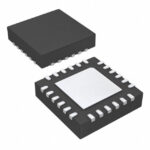 MP3367GR-P

The activity of extra discounts on wholesale prices is in full swing…
Please fill in your contact information and we will send you the latest wholesale price list.





