ChipApex | Global Electronic Components Supplier

SEARCH
Search Product
Search Post
— IC芯片 | 连接器 | 传感器 | 被动器件 —
Search productSearch post
— IC芯片 | 连接器 | 传感器 | 被动器件 —
Consult the customer manager about the wholesale price.
consultation hotline:86-132-6715-2157
email:[email protected]
Contact the product manager for consultation. One-stop consultation is available.
Do you want a lower wholesale price? Please send us your inquiry and we will reply immediately.
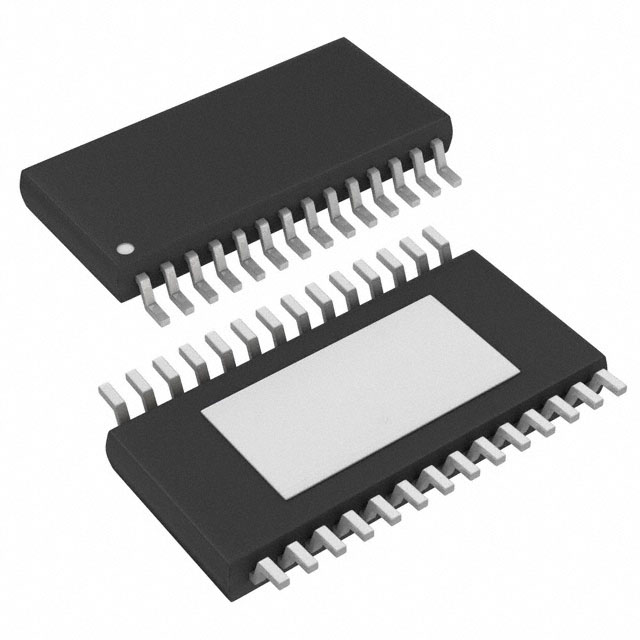
The MP3389EF-LF is a monolithic boost controller designed for driving white LED arrays in large LCD panel backlights. It features twelve internal current sources with 2.5% matching accuracy and supports up to 60mA per string. The device operates from a 5V to 28V input, stepping up to drive multiple series strings. Key electrical parameters include a 590 kHz switching frequency, 28V maximum supply voltage, and operation within a -40°C to +125°C temperature range. It utilizes a TSSOP-28 package.
Verify component authenticity through authorized distributors or direct manufacturer channels. Confirm RoHS compliance status and check for end-of-life notices, as availability may be limited. Ensure the specific suffix matches the required packaging format. Validate that the operating temperature range meets the target application requirements before finalizing procurement decisions.
Select this component for applications requiring high channel count and precise current matching without individual per-channel programming. It is suitable for designs needing a fixed boost topology with adjustable switching frequency. Consider thermal management due to power dissipation in dense PCB layouts. Verify that the external MOSFET selection aligns with the 28V output capability and current requirements.
This part belongs to the MP3389 family of LED lighting drivers from Monolithic Power Systems. It is specifically engineered for high-channel-count WLED applications. The EF suffix denotes the TSSOP-28 package variant. It serves as a specialized solution for display backlighting where uniformity and efficiency are critical design constraints.
MP3389EF-LF-Z is a compatible reel-packaged variant of the same functional device. Other MP3389 variants exist with different package options such as SOIC-28EP. Cross-referencing pinouts and electrical specifications is essential when substituting with non-MPS components.
The switching frequency is set by an external resistor connected to the device.
The internal current sources provide a matching accuracy of 2.5% across all twelve channels.
 MP3389EF-LF

The activity of extra discounts on wholesale prices is in full swing…
Please fill in your contact information and we will send you the latest wholesale price list.