ChipApex | Global Electronic Components Supplier

SEARCH
Search Product
Search Post
— IC芯片 | 连接器 | 传感器 | 被动器件 —
Search productSearch post
— IC芯片 | 连接器 | 传感器 | 被动器件 —
Consult the customer manager about the wholesale price.
consultation hotline:86-132-6715-2157
email:[email protected]
Contact the product manager for consultation. One-stop consultation is available.
Do you want a lower wholesale price? Please send us your inquiry and we will reply immediately.
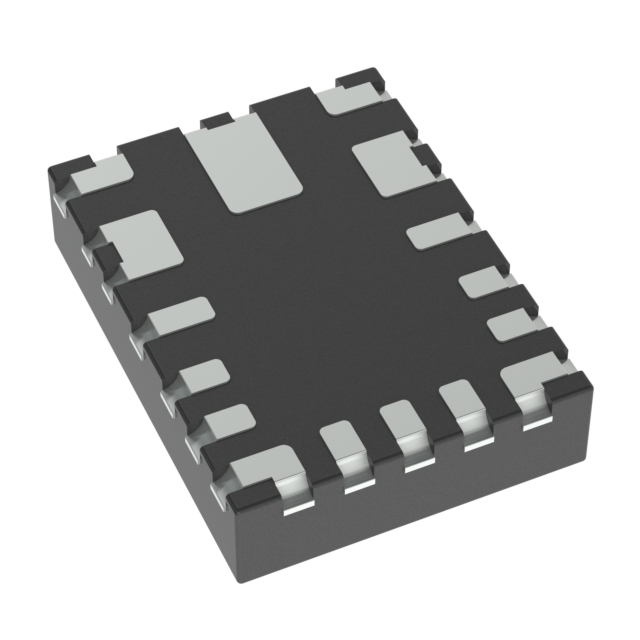
The MP7200GLE-Z is a synchronous LED driver IC from Monolithic Power Systems, designed for automotive lighting applications. It supports Buck-Boost topology with an input voltage range of 6 V to 42 V. The device delivers up to 1.2 A in Buck-Boost mode and 3 A in Buck mode. It operates at a fixed switching frequency of 2.3 MHz. The component features analog and PWM dimming capabilities, overcurrent protection with latch-off, and configurable thermal derating via remote NTC sense. It is housed in a QFN-19 package and rated for operation between -40°C and +125°C.
Verify the specific suffix 'Z' indicates RoHS compliance and halogen-free status as per manufacturer standards. Confirm that the QFN-19 package dimensions match your PCB footprint requirements. Ensure the design accounts for the 2.3 MHz switching frequency regarding external component selection. Validate that the application environment stays within the specified -40°C to +125°C operating temperature range.
Select this component when a single-channel driver is required for automotive lighting with wide input voltage variations. It is suitable for designs needing high efficiency in Buck mode or flexibility in Buck-Boost mode. Consider the integrated protections if system reliability against faults is critical. Compare against AEC-Q100 qualified variants if automotive certification is mandatory for the final product.
This part belongs to the MP7200 series of LED drivers from Monolithic Power Systems. It is distinct from the MPQ7200 series, which carries AEC-Q100 automotive qualification. The GLE-Z suffix denotes the specific package type and environmental compliance. It serves as a non-automotive-grade alternative to the MPQ7200GLE-AEC1-Z for general industrial or commercial lighting uses.
The MPQ7200GLE-AEC1-Z is a functionally similar variant but holds AEC-Q100 automotive qualification and supports a higher maximum junction temperature of +150°C. Direct replacement requires verifying if automotive certification is necessary and if the thermal performance meets the new application's demands.
 MP7200GLE-Z

The activity of extra discounts on wholesale prices is in full swing…
Please fill in your contact information and we will send you the latest wholesale price list.