ChipApex | Global Electronic Components Supplier
SEARCH
Search Product
Search Post
— IC芯片 | 连接器 | 传感器 | 被动器件 —
Search productSearch post
— IC芯片 | 连接器 | 传感器 | 被动器件 —
Consult the customer manager about the wholesale price.
consultation hotline:86-132-6715-2157
email:[email protected]
Contact the product manager for consultation. One-stop consultation is available.
Do you want a lower wholesale price? Please send us your inquiry and we will reply immediately.
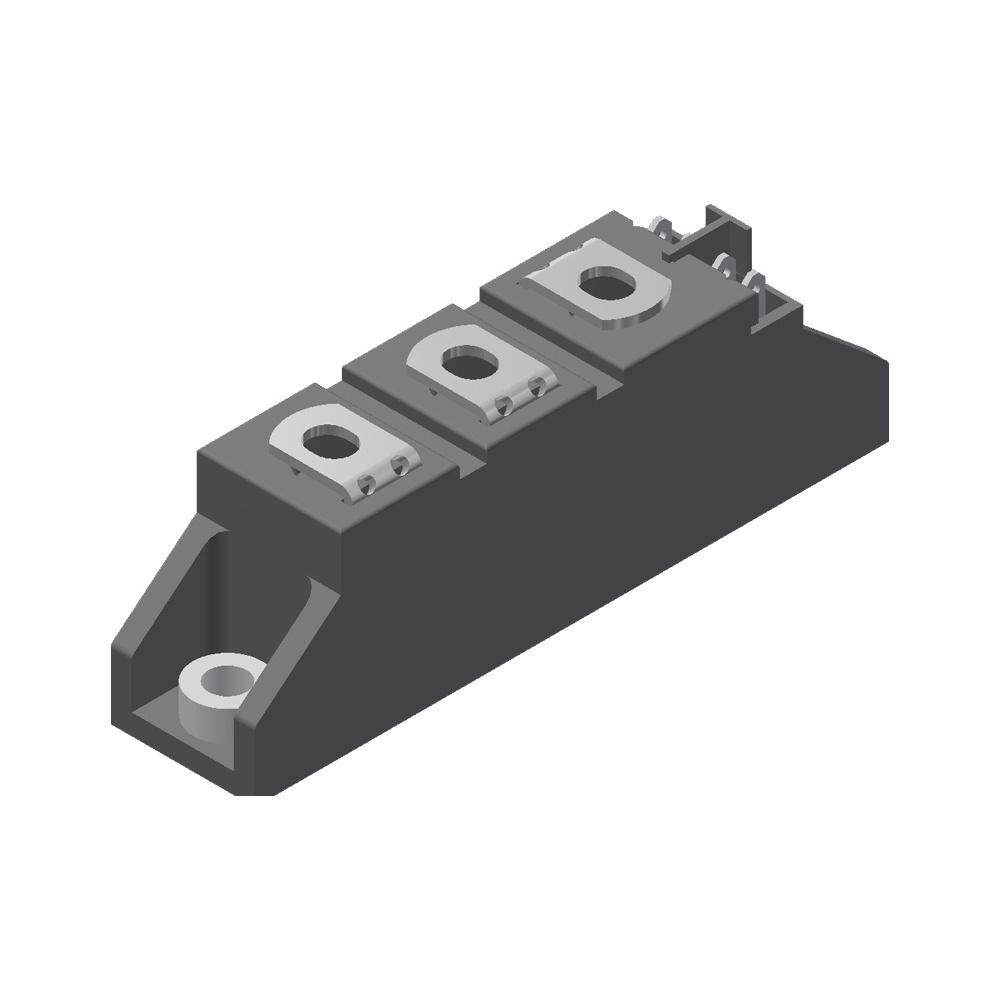
The MPA95-06DA is a Fast Recovery Epitaxial Diode (FRED) module manufactured by IXYS. It features a common anode configuration with one pair of diodes housed in a TO-240AA package. The device supports a maximum repetitive peak reverse voltage of 600 V and a continuous forward current of 95 A. Key electrical parameters include a forward voltage of approximately 1.36 V at rated current and a typical recovery time of 80 ns. The component operates within a junction temperature range of -40°C to +150°C and utilizes silicon technology for high-power rectification applications.
Verify the specific suffix against the manufacturer's latest datasheet to confirm pinout and electrical tolerances, as minor revisions may exist. Ensure the procurement channel provides original manufacturer documentation to validate authenticity. Cross-reference the RoHS compliance status with current environmental regulations before finalizing orders. Confirm that the TO-240AA mounting interface matches the intended heatsink design requirements.
Select this component when a common anode topology is required for high-current rectification. The 95 A rating suits medium-to-high power industrial applications. Compare the 80 ns recovery time against system switching frequencies to ensure minimal reverse recovery losses. Evaluate the thermal resistance characteristics of the TO-240AA package relative to the expected ambient operating conditions.
This part belongs to the MEK/MPA series of fast recovery diode modules from IXYS. These modules are designed for demanding power electronics environments requiring high reliability. The series typically offers various voltage and current ratings within the same mechanical footprint, allowing for standardized thermal design across different power levels.
The MPK95-06DA is a related variant within the same product family. Verify if the specific pin configuration or minor electrical parameter differences between the MPA and MPK suffixes align with the existing circuit board layout and thermal constraints.
 MPA95-06DA
The activity of extra discounts on wholesale prices is in full swing…
Please fill in your contact information and we will send you the latest wholesale price list.